

Pet Business Insurance: Protecting Your Passion and Profits

Pet Business Insurance: Protecting Your Passion and Profits

Pet Business Insurance: Protecting Your Passion and Profits

In today’s world, where pets have become cherished family members, the pet industry is thriving. From pet grooming salons to doggy daycare centers, pet businesses are on the rise. If you’re a proud pet business owner, it’s vital to protect your enterprise and financial investment. This is where pet business insurance comes into play, providing comprehensive coverage and peace of mind.

Introduction

Running a pet business comes with its unique set of challenges and risks. Accidents happen, and unforeseen circumstances can quickly turn a profitable venture into a financial nightmare. That’s why having the right insurance coverage is crucial for the long-term success and stability of your pet business.

Importance of Pet Business Insurance

Protecting Against Liability

As a pet business owner, you interact with animals daily, and despite your best efforts, accidents can occur. Pet business insurance protects you against liability claims, such as a dog biting a customer or damage caused by an animal in your care. Without insurance, you could be held personally responsible for medical expenses, legal fees, and potential settlements, which can be financially devastating.

Safeguarding Against Accidents

Pets can be unpredictable, and even the most well-behaved animals can cause accidental damage to property. Whether it’s a scratched floor, a chewed-up sofa, or broken equipment, the cost of repairs or replacements can quickly add up. Pet business insurance helps cover these unforeseen expenses, allowing you to focus on providing exceptional care to your furry clients.

Types of Pet Business Insurance

General Liability Insurance

General liability insurance is the foundation of any pet business insurance policy. It protects against third-party bodily injury, property damage, and advertising injuries. If a customer slips and falls in your establishment or their pet sustains an injury under your care, general liability insurance can help cover medical expenses and legal costs.

Professional Liability Insurance

Also known as errors and omissions insurance, professional liability insurance safeguards pet professionals against claims of negligence or inadequate services. If a client accuses you of professional errors, such as grooming mistakes or misdiagnosis, this coverage can provide legal protection and financial compensation.

Property Insurance

Property insurance covers the physical assets of your pet business, including the building, equipment, inventory, and supplies. In case of fire, theft,

natural disasters, or vandalism, property insurance helps you recover financially by covering the cost of repairs or replacements.

Workers’ Compensation Insurance

If you have employees working in your pet business, workers’ compensation insurance is essential. It provides coverage for medical expenses, disability benefits, and lost wages in case an employee is injured on the job. This insurance not only protects your employees but also safeguards your business from potential lawsuits related to workplace injuries.

Benefits of Pet Business Insurance

Financial Protection

One of the primary benefits of pet business insurance is the financial protection it offers. In the event of an accident, lawsuit, or property damage, insurance coverage can help mitigate the financial burden. Instead of paying hefty costs out of pocket, your insurance policy will provide the necessary funds, ensuring the continuity of your business operations.

Peace of Mind

Running a pet business can be demanding, and worrying about potential risks and liabilities can add unnecessary stress. By having pet business insurance, you gain peace of mind knowing that you have a safety net in place. You can focus on providing excellent service to your clients, knowing that you’re protected from unforeseen circumstances.

Reputation Management

In the pet industry, reputation is everything. If an unfortunate incident occurs in your pet business, having insurance shows your commitment to responsibility and professionalism. It demonstrates that you are prepared for the unexpected and are willing to go the extra mile to protect your clients and their beloved pets. This commitment to safety can enhance your reputation and attract more customers to your business.

Factors to Consider When Choosing Insurance

Coverage Options

When selecting pet business insurance, carefully assess the coverage options provided by different insurance providers. Ensure that the policy covers the specific risks and liabilities associated with your pet business, including animal bites, property damage, and negligence claims.

Policy Limits

Policy limits refer to the maximum amount an insurance company will pay for a claim. It’s crucial to understand the policy limits and ensure they align with the potential risks your pet business may face. Consider your business size, the number of clients you serve, and the value of your assets when determining appropriate policy limits.

Deductibles and Premiums

Deductibles are the amount you must pay out of pocket before your insurance coverage kicks in. Premiums, on the other hand, are the regular payments you make to maintain your insurance policy. Compare deductibles and premiums from different insurance providers to find a balance between affordability and coverage.

Insurance Provider Reputation

Choosing a reputable insurance provider is essential to ensure a smooth claims process and reliable coverage. Research insurance companies, read customer reviews, and seek recommendations from fellow pet business owners to find a trustworthy insurance provider with a track record of excellent service.

How to Get Pet Business Insurance

Research and Compare Providers

Start by researching different insurance providers that specialize in pet business insurance. Look for companies with experience in the pet industry and a comprehensive understanding of the unique risks involved.

Assess Your Needs

Evaluate your specific needs as a pet business owner. Consider the services you provide, the number of animals in your care, the size of your business, and any additional risks you may face. This assessment will help you determine the types and amount of coverage required.

Obtain Quotes

Contact multiple insurance providers and request quotes based on your specific needs. Compare the coverage options, policy limits, deductibles, and premiums to make an informed decision.

Review Policy Details

Once you’ve received quotes, carefully review the

policy details of each insurance provider. Pay close attention to the coverage terms, exclusions, and any additional benefits offered. Ensure that the policy aligns with your requirements and provides comprehensive protection for your pet business.

Case Study: Successful Pet Business with Insurance

To illustrate the importance of pet business insurance, let’s consider the case of “Pawsitive Pet Care,” a thriving dog daycare center. The owner, Sarah, recognized the need for insurance early on and obtained comprehensive coverage for her business. One day, while a group of dogs was playing in the facility, an accidental scuffle broke out, resulting in a minor injury to one of the dogs. Thanks to her pet business insurance, Sarah was able to cover the veterinary expenses and potential legal costs without jeopardizing her business or personal finances. This incident not only reinforced the importance of insurance but also showcased Sarah’s commitment to the well-being of her clients and their pets, enhancing the reputation of “Pawsitive Pet Care” within the community.

Conclusion

In the dynamic and ever-growing pet industry, protecting your pet business is paramount. Pet business insurance provides the necessary coverage and financial protection against liabilities, accidents, and unexpected events. By investing in insurance, you safeguard your business, provide peace of mind, and demonstrate your commitment to the well-being of your clients and their beloved pets. Take the time to research reputable insurance providers, assess your needs, and select a policy that best suits your pet business requirements.

FAQs

Q1. Is pet business insurance a legal requirement?

No, pet business insurance is not a legal requirement in most jurisdictions. However, it is highly recommended to protect yourself, your business, and your clients from potential liabilities and financial risks.

Q2. Can I add additional coverage to my pet business insurance policy?

Yes, many insurance providers offer optional coverage add-ons that can be tailored to your specific needs. These may include coverage for grooming services, pet transportation, or professional equipment.

Q3. Are there any exclusions in pet business insurance policies?

Yes, insurance policies may have certain exclusions, such as intentional acts of harm, dishonesty, or damage caused by natural disasters. It’s crucial to carefully review the policy terms and conditions to understand the specific exclusions.

Q4. How much does pet business insurance cost?

The cost of pet business insurance varies depending on factors such as the size of your business, the services you provide, the number of animals in your care, and the coverage limits you choose. It’s best to obtain quotes from multiple insurance providers to compare costs.

Q5. Can I cancel my pet business insurance policy if I no longer need it?

Yes, you can generally cancel your pet business insurance policy. However, it’s important to review the cancellation terms outlined in your policy and communicate with your insurance provider to ensure a smooth process.

Partner Site : SEO Services, Movie News, Real Estate News, Business News Today, Hot News Today, Get Auto Repair, Business Franchise, News Technology, Fashion Sports Shoes, Health News

What is an Injury Attorney?

What is an Injury Attorney?

What is an Injury Attorney?

When an individual sustains injuries due to the negligence or wrongdoing of another party, seeking legal assistance from an injury attorney can be crucial. Injury attorneys specialize in personal injury law and help their clients navigate the complex legal process, ensuring they receive the compensation they deserve. This article will provide a comprehensive overview of injury attorneys, their role, how to find the right attorney, and the benefits of hiring one.

What is an Injury Attorney?

An injury attorney, also known as a personal injury lawyer, is a legal professional who represents individuals who have suffered physical or psychological harm as a result of someone else’s actions or negligence. These attorneys have expertise in personal injury law and advocate for their clients’ rights to obtain compensation for their losses.

When to Hire an Injury Attorney

Determining when to hire an injury attorney can be crucial for securing the best possible outcome for your case. If you have been involved in an accident or incident that resulted in injuries and believe someone else is at fault, it’s advisable to consult with an injury attorney. Hiring an attorney early on can ensure you understand your legal rights, preserve evidence, and avoid potential pitfalls during the legal process.

Types of Personal Injury Cases

Injury attorneys handle a wide range of personal injury cases, including but not limited to:

  1. Car accidents
  2. Slip and fall accidents
  3. Medical malpractice
  4. Workplace accidents
  5. Product liability cases
  6. Wrongful death cases

Each type of case may require specific legal expertise, so it’s essential to find an injury attorney with experience in handling similar cases.

Finding the Right Injury Attorney

Finding the right injury attorney is crucial for the success of your case. Consider the following steps when searching for an attorney:

  1. Research: Look for reputable injury attorneys in your area. Read reviews, check their track record, and evaluate their experience and credentials.
  2. Consultations: Schedule consultations with potential attorneys to discuss your case. Ask about their experience, success rate, and approach to handling cases similar to yours.
  3. Fee Structure: Understand the attorney’s fee structure. Many injury attorneys work on a contingency basis, meaning they only get paid if they win your case. Clarify the percentage they will take from your settlement or award.
  4. Compatibility: Choose an attorney you feel comfortable working with. Effective communication and a good rapport are essential throughout the legal process.

Questions to Ask an Injury Attorney

During your consultation with an injury attorney, consider asking the following questions:

  1. How long have you been practicing personal injury law?
  2. Have you handled cases similar to mine before?
  3. What is your success rate in obtaining favorable settlements or verdicts?
  4. Will you be personally handling my case, or will it be delegated to someone else?
  5. How do you communicate with your clients throughout the process?
  6. What is your fee structure, and do you work on a contingency basis?

Asking these questions will help you assess the attorney’s qualifications and determine if they are the right fit for your case.

The Role of an Injury Attorney

An injury attorney fulfills various roles throughout the legal process to ensure their clients receive fair compensation for their injuries. Here are some key responsibilities of an injury attorney:

  1. Case Evaluation: An injury attorney will assess the details of your case, gather evidence, and determine the strength of your claim. They will identify liable parties and calculate the potential value of your damages.
  2. Legal Representation: An injury attorney will represent you in negotiations with insurance companies, opposing lawyers, and in court if necessary. They will use their legal expertise to build a strong case on your behalf.
  3. Evidence Gathering: Attorneys will collect evidence such as medical records, accident reports, witness statements, and expert opinions to support your claim. They will ensure that all necessary documentation is obtained to strengthen your case.
  4. Negotiations: Injury attorneys are skilled negotiators who will engage in settlement discussions with the opposing party or their insurance company. They will strive to achieve a fair settlement that adequately compensates you for your injuries, medical expenses, lost wages, and pain and suffering.
  5. Trial Representation: If a fair settlement cannot be reached, an injury attorney will prepare your case for trial. They will present compelling arguments, cross-examine witnesses, and advocate for your rights in the courtroom.
  6. Legal Advice: Throughout the process, an injury attorney will provide you with legal guidance and advice. They will explain your rights, inform you of potential legal options, and help you make informed decisions regarding settlement offers or trial proceedings.
  7. Documentation and Paperwork: Injury cases involve a substantial amount of paperwork, including legal filings, court documents, and settlement agreements. An injury attorney will handle all the necessary paperwork on your behalf, ensuring accuracy and compliance with legal procedures.

The Benefits of Hiring an Injury Attorney

Hiring an injury attorney can significantly impact the outcome of your personal injury claim. Here are some benefits of having professional legal representation:

  1. Legal Expertise: Injury attorneys have in-depth knowledge of personal injury law and are familiar with legal procedures. They understand the complexities of the legal system and can navigate through it effectively on your behalf.
  2. Maximizing Compensation: An experienced injury attorney will work diligently to maximize the compensation you receive. They will assess the full extent of your damages, including medical expenses, lost wages, future rehabilitation costs, and pain and suffering. Their negotiation skills will ensure you receive a fair settlement.
  3. Objective Evaluation: Emotions can cloud judgment when dealing with a personal injury case. An injury attorney provides an objective perspective and can assess your case impartially. They will give you realistic expectations and advise you on the best course of action.
  4. Handling Insurance Companies: Dealing with insurance companies can be challenging. Injury attorneys have experience negotiating with insurance adjusters and are familiar with their tactics. They will protect your rights and handle all communication with insurance companies on your behalf.
  5. Peace of Mind: Hiring an injury attorney alleviates the burden of dealing with legal complexities. You can focus on your recovery while your attorney handles the legal aspects of your case. This peace of mind allows you to heal and move forward with confidence.

The Legal Process in Personal Injury Cases

Understanding the legal process involved in personal injury cases can help you navigate your claim more effectively. Here is a general overview of the typical stages:

  1. Consultation: You will meet with an injury attorney to discuss the details of your case. They will evaluate the merits of your claim and advise you on the best course of action.
  2. Investigation: Your attorney will conduct a thorough investigation, gathering evidence such as medical records, accident reports, photographs, and witness statements. This evidence will be crucial in building a strong case.
  3. Demand and Negotiation: Your attorney will send a demand letter to the responsible party or their insurance company, outlining the extent of your injuries and the compensation you are seeking. They will engage in negotiations to reach a fair settlement.
  4. Filing a Lawsuit: If a settlement cannot be reached, your attorney may file a lawsuit on your behalf. This initiates the formal legal process and involves drafting legal documents, including a complaint, which outlines your allegations against the defendant.
  5. Discovery: During the discovery phase, both parties exchange relevant information and evidence. This includes interrogatories, where written questions are answered under oath, and depositions, where witnesses provide sworn testimony.
  6. Settlement Conference/Mediation: Before going to trial, there may be a settlement conference or mediation, where a neutral third party facilitates negotiations between you and the opposing party. The goal is to reach a settlement without going to court.
  7. Trial: If a settlement is not reached, your case will proceed to trial. Your attorney will present evidence, question witnesses, and argue your case before a judge or jury. The decision will be based on the preponderance of evidence, meaning the greater weight of evidence favors your claim.
  8. Judgment and Appeal: If you win your case, the court will issue a judgment specifying the compensation you are entitled to. However, the opposing party may choose to appeal the decision, leading to additional legal proceedings.

How Injury Attorneys Work on a Contingency Basis

Many injury attorneys work on a contingency basis, which means they only receive payment if they win your case. Here’s how it typically works:

  1. No Upfront Costs: When hiring an attorney on a contingency basis, you won’t be required to pay any upfront fees or retainers. This makes legal representation more accessible, especially for individuals who may not have the financial means to pay for legal services upfront.
  2. Legal Fees: If your attorney successfully negotiates a settlement or wins your case, they will receive a predetermined percentage of the compensation awarded. This percentage is agreed upon between you and your attorney at the beginning of your representation.
  3. Risk-Free Representation: Working on a contingency basis means that your attorney is invested in the success of your case. They will work diligently to build a strong claim and maximize your compensation. If they are unable to secure a favorable outcome, you won’t owe any legal fees.
  4. Costs and Expenses: While attorneys typically cover the costs of litigation, such as court filing fees and expert witness fees, you may still be responsible for certain expenses, such as medical record retrieval or deposition costs. Your attorney will discuss these details with you during the initial consultation.

Working with an attorney on a contingency basis allows individuals with valid personal injury claims to pursue legal action without financial barriers.

Maximizing Compensation with an Injury Attorney

One of the key benefits of hiring an injury attorney is their ability to maximize your compensation. Here’s how they achieve this:

  1. Accurate Assessment: An experienced injury attorney will evaluate the full extent of your damages, including economic losses (medical expenses, lost wages) and non-economic losses (pain and suffering, emotional distress). They will ensure that no aspect of your damages is overlooked.
  2. Gathering Strong Evidence: Attorneys know the importance of compelling evidence in building a strong case. They will gather medical records, expert opinions, accident reports, and any other relevant evidence to support your claim. This helps establish the severity of your injuries and the impact they have had on your life.
  3. Expert Negotiation Skills: Injury attorneys are skilled negotiators who understand the tactics used by insurance companies to undervalue or deny claims. They will negotiate with the insurance adjusters on your behalf, using their expertise to advocate for a fair settlement that reflects the true value of your injuries.
  4. Understanding the Law: Personal injury laws can be complex and vary from jurisdiction to jurisdiction. A knowledgeable attorney will have a deep understanding of the applicable laws and regulations. They will leverage this knowledge to strengthen your case and ensure your rights are protected.
  5. Access to Resources: Injury attorneys often have access to a network of experts, including medical professionals, accident reconstruction specialists, and economists. These resources can provide expert opinions and testimony to support your claim and demonstrate the long-term impact of your injuries.
  6. Trial Experience: While most personal injury cases are settled outside of court, there are instances where going to trial becomes necessary. If your case goes to trial, an experienced injury attorney will present a compelling argument, cross-examine witnesses, and fight for your rights in front of a judge and jury. Their trial experience can significantly impact the outcome and the amount of compensation awarded.
  7. Mitigating Comparative Fault: In some cases, the opposing party may argue that you were partially at fault for the accident or injuries. An injury attorney will skillfully address these arguments and work to minimize any potential reduction in your compensation.

By leveraging their knowledge, experience, and resources, injury attorneys are dedicated to maximizing the compensation you receive for your injuries and losses.

Common Misconceptions about Injury Attorneys

There are several misconceptions surrounding injury attorneys. Let’s address some of the common ones:

  1. They Are Only Interested in Money: It is true that injury attorneys work on a contingency basis and seek compensation for their clients. However, their primary goal is to ensure justice and fair compensation for individuals who have been wrongfully injured. They fight for their clients’ rights and work towards holding negligent parties accountable.
  2. They Make the Legal Process Lengthy: While personal injury cases can take time to resolve, injury attorneys strive to efficiently navigate the legal process. They understand the importance of a timely resolution and work diligently to reach a favorable outcome as quickly as possible.
  3. They Always Take Cases to Trial: In reality, the majority of personal injury cases are settled outside of court through negotiations. Attorneys explore all options for settlement before recommending trial. However, if a fair settlement cannot be reached, they are prepared to take the case to trial to protect your interests.
  4. They are Expensive: Hiring an injury attorney on a contingency basis eliminates the need for upfront fees or out-of-pocket expenses. This allows individuals to access quality legal representation without the financial burden. Attorneys are only compensated if they win your case, making it a risk-free option.
  5. They Only Handle Large Cases: Injury attorneys handle cases of all sizes. While some cases may involve significant damages, they also represent clients with minor injuries seeking fair compensation. Regardless of the size of your case, an injury attorney can provide dedicated advocacy and pursue the compensation you deserve.
  6. They Delay Medical Treatment: On the contrary, injury attorneys understand the importance of prompt medical treatment for their clients. They encourage clients to seek medical attention as soon as possible after an accident to ensure their injuries are properly diagnosed and documented. Your attorney will work alongside medical professionals to gather necessary evidence for your claim.
  7. They Guarantee Specific Outcomes: While injury attorneys strive to achieve the best possible outcome for their clients, it is unethical to guarantee specific results. Each case is unique, and the outcome depends on various factors, including the strength of the evidence, applicable laws, and the decisions of insurance companies or the court.

Conclusion:

Injury attorneys play a crucial role in assisting individuals who have suffered injuries due to the negligence of others. They provide legal expertise, negotiate on your behalf, and navigate the complex legal process to maximize your compensation. By debunking common misconceptions, we can better understand the value and importance of injury attorneys in seeking justice and fair compensation for their clients.

FAQs:

  1. How long does it take to resolve a personal injury case? The duration of a personal injury case can vary depending on its complexity. Some cases may settle within a few months, while others may take years, particularly if they go to trial.
  2. Will I have to go to court for my personal injury case? Most personal injury cases are settled through negotiations without going to court. However, if a fair settlement cannot be reached, your attorney may recommend pursuing a trial.
  3. What if I can’t afford an injury attorney? Injury attorneys typically work on a contingency basis, meaning they only get paid if they win your case. This eliminates the need for upfront fees, making legal representation accessible to individuals who may not have the financial means to hire an attorney.
  4. How do I choose the right injury attorney for my case? When selecting an injury attorney, consider their experience, track record, and reputation. Schedule consultations with multiple attorneys to discuss your case and determine who you feel most comfortable working with.

Partner Site : Financial Management, Vacation Destinations, Home Garden, Landscape Design, Home Decoration, How News Today, Healthy Lifestyle, Finance News, Business Loans, Healthy Update

20 Manufacturing Business Ideas to Start in 2023

20 Manufacturing Business Ideas to Start in 2023

The manufacturing industry is thriving and offers plenty of opportunities for those looking to make their mark in the world of business. From creating custom parts and components to developing innovative products and services, there are plenty of exciting ideas that budding entrepreneurs can explore.

In this article, we’ll take a look at some of the best manufacturing business ideas to consider starting in 2023. Let’s dive in!


What is a small manufacturing business?

A small manufacturing business is a company that produces goods, components, or services. They can range in size from micro-enterprises to larger companies.

These businesses usually involve production processes, such as assembly lines and machine shop operations.

They often also include additional aspects like product design, prototyping, market analysis, and consumer research.

The Manufacturing Industry in 2023

The manufacturing industry in 2023 is an exciting and profitable place for entrepreneurs to invest their energy and resources. With new technologies, processes, and materials readily available, manufacturers are able to create high-quality products at a more efficient rate than ever.

In addition, automation and digitalization have further improved the industry’s speed, accuracy, and scalability. This means that small businesses can quickly and easily enter the market and compete with larger competitors.

The future of the manufacturing sector looks very promising as more businesses capitalize on these advances in technology.

manufacturing business

Why You Should Consider a Manufacturing Business

With so many reasons to start a manufacturing business, it can be difficult to narrow down your focus.

Here are five reasons why you should consider starting a manufacturing business in 2023:

  • Lower Cost of Entry – Today’s technologies have made it easier and cheaper for small businesses to enter the manufacturing sector without sacrificing quality.
  • Accessible Talent Pool – The abundance of qualified and experienced personnel available through digital networks makes finding the right people for your team much easier.
  • High Return on Investment – Advanced production processes can maximize profits while minimizing labor costs and time-to-market.
  • Versatility – Manufacturing allows businesses to create complex components or customize products quickly, opening up new opportunities for success.
  • Sustainable Business Model – Automation, digitalization, and other advanced processes help maintain a competitive edge while reducing environmental impact.

Top Small Manufacturing Business Ideas

With some creativity, hard work, and the right resources, you can turn a small manufacturing business into a success story.

Here are 20 of the best small-scale manufacturing business ideas to help get you started:

1. Food Processing

With the ever-growing demand for organic, natural, and healthy food products, food processing is a booming industry. Profitable food processing businesses can specialize in creating custom products like canned fruits and vegetables, dried herbs, sauces and dressings, frozen juices, and much more.

2. Pharmaceuticals

As the world’s population ages, the demand for prescription and over-the-counter medications is skyrocketing. You can start a profitable business in the pharmaceutical industry and create products like tablets, capsules, and syrups to meet this need.

3. Automotive Parts Manufacturing

The automotive industry is constantly evolving and creating new opportunities for entrepreneurs. By starting a custom automotive parts business, you can create the perfect components for cars, trucks, and other vehicles.

4. Steel Fabrication

Steel fabrication businesses create custom parts for use in various industries. These businesses are typically well-versed in welding and machining, making them a valuable resource for a variety of customers.

5. Refrigeration and HVAC Equipment

As the need for energy-efficient cooling and heating systems grows, so does the demand for refrigeration and HVAC equipment. By starting a refrigeration and HVAC equipment business, you can provide custom solutions to a wide range of customers.

6. Bicycle Manufacturing Company

The world of cycling is growing rapidly, and there has never been a better time to get into the game. Starting a bicycle manufacturing business can give you the opportunity to create custom bikes and components for a variety of customers.

7. 3D Printers

3D printing is becoming more commonplace in the manufacturing world and offers an exciting new way to create custom parts and prototypes. Starting a 3D printing business will allow you to create parts for customers quickly and efficiently and can be started with moderate capital investment.

8. Textiles (Knitwear)

Textiles provide both comfort and style, making them a great option for entrepreneurs who want to jump into the manufacturing world. Specializing in knitwear can give you the opportunity to create custom apparel and accessories for a variety of customers.

9. Electronics Manufacturing

The demand for electronics is increasing, which means there’s never been a better time to start an electronics manufacturing business. You can specialize in creating custom circuit boards and other electronic components for a variety of customers.

10. Furniture Manufacturing

Furniture manufacturing businesses can create custom furniture for a variety of customers, from residential to commercial. Whether you specialize in woodworking or metalworking, starting a furniture manufacturing business can give you the opportunity to express your creativity and make a profit.

11. CNC Machine Shops (Computer Numerical Control)

CNC machine shops are in high demand as businesses look to create custom parts quickly and accurately. By investing in the right technology, you can provide a valuable service to a variety of customers.

12. Power Tool Manufacturing

Manufacturing power tools is a great way to provide businesses and consumers with the tools they need. Starting a power tool manufacturing business allows you to create custom products for customers and provide them with quality products.

13. Microbrewery Business

The craft beer industry is booming, and there’s never been a better time to start your own microbrewery business. You can create custom recipes and unique brews to meet the needs of beer enthusiasts all over the world. Plus, you can package your own beers in cans or bottles and sell them to local restaurants and stores.

14. Industrial Valves Production

Industrial valves are a critical component for many manufacturing processes. Starting an industrial valve production business allows you to create components for customers and helps make sure that the products they produce are of the highest quality.

15. Injection Molding Business

Injection molding is a popular manufacturing process that is used to create a variety of products. Businesses use injection molding to create custom parts and products with a variety of materials.

16. Solar Panel Manufacturing

The demand for renewable energy sources is growing, making solar panel manufacturing a great opportunity for entrepreneurs. In this growing industry, you can create solar panels and components customized to a customer’s specific needs.

17. Sports Equipment Manufacturer

Sports equipment is a great way to get people of all ages active and involved. Starting a sports equipment manufacturing business requires a substantial capital investment, but it can be a profitable endeavor.

18. Concrete Block Making

Concrete block-making is a popular manufacturing process that is used to create blocks for construction and other purposes. Starting a concrete block-making business will give you a great opportunity to work with customers in various industries.

19. Garment Manufacturing Business

Starting a successful garment manufacturing business can give you the chance to create custom clothing for a variety of customers. With the right technology and team, you can provide quality products to individuals and businesses alike.

20. Leather Products Manufacturing

Leather goods are popular in many different types of industries, from fashion to furniture. Leather products manufacturing companies that specialize in the production of leather goods need experienced staff, high-end equipment, and quality raw materials.

What small manufacturing businesses are most profitable?

Small manufacturing businesses that are able to capitalize on specialist areas of the sector, such as medical and aerospace, can yield particularly impressive returns.

Businesses that take advantage of digitalization to streamline operations or automation to reduce labor costs can also be very successful.

To maximize profitability, it is important to select an area of expertise and focus on innovative technologies and processes that give a competitive edge.

What manufacturing business is best for a new entrepreneur?

Depending on the entrepreneur’s interests and skill set, there are many different types of businesses to choose from.

For example, food manufacturing businesses require expertise in food safety and quality assurance, while textile manufacturing entrepreneurs need extensive knowledge of the production process.

For those with a technical background, electronics or aerospace manufacturing may be the right fit.

What is the easiest manufacturing business idea to start?

The easiest manufacturing business ideas to start are those that require low capital costs, minimal staff, and are scalable.

Examples of such businesses include the production of custom clothing items, jewelry, 3D printing services, and other items that can be produced with low costs and high demand.

What manufactured products are in the most demand?

Manufactured products that are in the highest demand currently include electronics, automotive parts, textiles and apparel, furniture and home furnishings, toys, and sporting equipment.

These items are typically produced on a large scale using high-tech machinery, creating efficient supply chains and allowing for continuous production.

What product has the simplest manufacturing process?

The product with the simplest manufacturing process is likely to be something that requires minimal material inputs and the least amount of human labor.

Examples include simple food items like bread or pasta and commodities like paper, plastic bottles, and aluminum cans.

These items have just a few steps in their production process making them relatively quick and straightforward to produce.

YOU MIGHT ALSO LIKE:

Image: Envato Elements


More in: Manufacturing Business


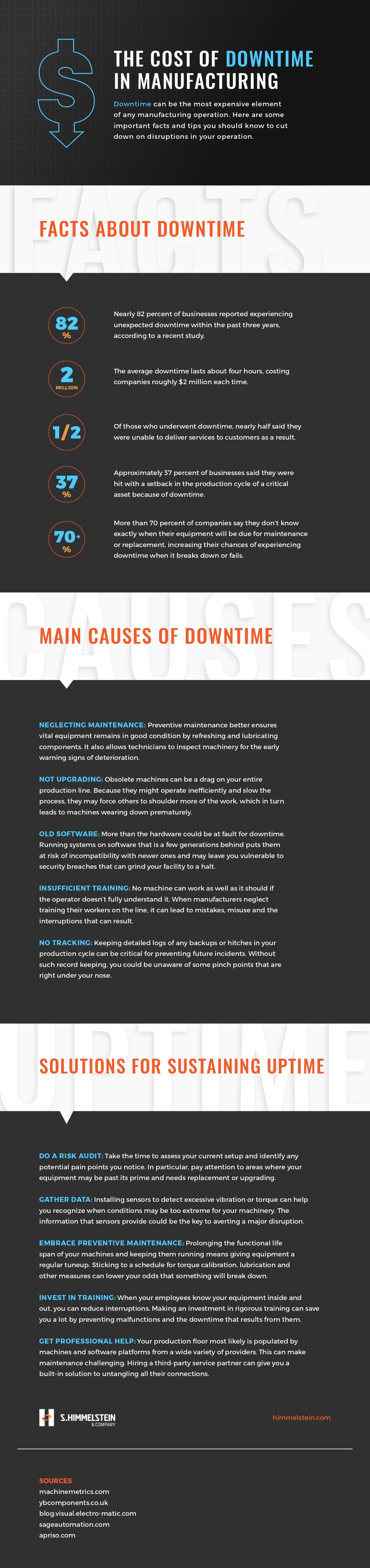
No matter what you decide to manufacture, you need to be aware of challenges that can come your way. Please see the resource below for some information on how downtime can affect you.


torque transducer

Provided by S. Himmelstein & Company – torque transducer


Plastic Injection Molding

Infographic created by RevPart, Offering Quick-Turn Custom Plastic Injection Molding Services

Slip and Fall Lawyers

Slip and Fall Lawyers

Slip and Fall Lawyers

Introduction

Slip and fall accidents can happen unexpectedly, leading to severe injuries and unexpected medical expenses. In such situations, it’s crucial to understand your rights and seek legal assistance from slip and fall lawyers who specialize in personal injury law. This article will explore the importance of slip and fall lawyers, the role they play in advocating for victims, the benefits of hiring them, and the steps to take after a slip and fall accident.

Definition of Slip and Fall Accidents

Slip and fall accidents occur when a person loses balance and falls on another person’s property due to hazardous conditions. These accidents often result from factors such as wet or slippery surfaces, poorly maintained premises, uneven flooring, or a lack of warning signs. Victims of slip and fall accidents can suffer injuries ranging from minor bruises to broken bones or head trauma.

Common Causes of Slip and Fall Accidents

  1. Wet or slippery surfaces: Spills, leaks, or recently mopped floors can create dangerous conditions.
  2. Poorly maintained premises: Negligent upkeep of properties, including cracked sidewalks, loose handrails, or inadequate lighting, can contribute to accidents.
  3. Uneven flooring: Uneven or damaged flooring, loose carpets, or irregular steps can cause trips and falls.
  4. Lack of warning signs: Failing to notify visitors of potential hazards, such as construction zones or wet surfaces, can increase the risk of accidents.

The Role of Slip and Fall Lawyers

Slip and fall lawyers play a crucial role in advocating for the rights of victims and helping them seek compensation for their injuries. Here are some key aspects of their role:

  1. Advocating for victims’ rights: Slip and fall lawyers are dedicated to protecting the rights of accident victims. They understand the complexities of personal injury law and work tirelessly to ensure their clients receive the compensation they deserve.
  2. Investigating the accident: Slip and fall lawyers conduct a thorough investigation of the accident to determine liability. They gather evidence, interview witnesses, review surveillance footage if available, and assess the conditions that led to the accident.
  3. Gathering evidence: To build a strong case, slip and fall lawyers collect and analyze relevant evidence, such as medical records, accident reports, photographs of the scene, and any other documentation that supports the victim’s claim.
  4. Negotiating with insurance companies: Slip and fall lawyers have experience dealing with insurance companies. They skillfully negotiate with insurance adjusters to reach a fair settlement that covers medical expenses, lost wages, pain and suffering, and other damages.
  5. Representing clients in court: If a fair settlement cannot be reached through negotiations, slip and fall lawyers are prepared to take the case to court. They represent their clients, present evidence, question witnesses, and make persuasive arguments to secure a favorable outcome.

Benefits of Hiring a Slip and Fall Lawyer

Hiring a slip and fall lawyer can provide numerous benefits to accident victims. Some of the key advantages include:

  1. Expertise in personal injury law: Slip and fall lawyers specialize in personal injury cases and possess in-depth knowledge of relevant laws and regulations. They understand the complexities of these cases and can navigate the legal system effectively on behalf of their clients.
  2. Maximizing compensation: Slip and fall lawyers have the skills and experience to assess the full extent of their clients’ damages. They work diligently to ensure victims receive maximum compensation for medical expenses, rehabilitation costs, lost wages, pain and suffering, and other relevant damages.
  3. Reducing stress and burden: Dealing with the aftermath of a slip and fall accident can be overwhelming, especially when trying to recover from injuries. By hiring a slip and fall lawyer, victims can alleviate the legal burden and focus on their recovery while knowing their case is in capable hands.
  4. Improving chances of success: Slip and fall lawyers understand the intricacies of building a strong case. They know which evidence to gather, how to present it effectively, and the legal arguments that will best support their clients’ claims. Hiring a lawyer significantly increases the chances of a successful outcome.

Steps to Take After a Slip and Fall Accident

After a slip and fall accident, it is essential to take the following steps:

  1. Seeking medical attention: The first priority is to seek immediate medical attention for any injuries sustained. Even if injuries seem minor, it is crucial to have a medical professional assess and document them.
  2. Documenting the scene: If possible, document the scene of the accident by taking photographs or videos. Capture any hazardous conditions that contributed to the fall, such as wet floors, broken stairs, or inadequate lighting.
  3. Reporting the incident: Report the accident to the property owner, landlord, or manager. Ensure that a written report is filed, and ask for a copy for your records.
  4. Collecting witness information: Obtain contact information from anyone who witnessed the accident. Witness testimonies can be valuable evidence to support your case.

Statute of Limitations and Time Constraints

It is crucial to understand the statute of limitations and time constraints associated with slip and fall cases. These legal time limits vary depending on the jurisdiction and can significantly impact your ability to file a claim. Acting promptly after an accident is vital to ensure you meet all necessary deadlines.

How to Choose the Right Slip and Fall Lawyer

When selecting a slip and fall lawyer to represent your case, consider the following factors:

  1. Experience and expertise: Look for a lawyer who has substantial experience in handling slip and fall cases. They should possess a deep understanding of the relevant laws and have a track record of successfully representing clients in similar situations.
  2. Reputation and track record: Research the lawyer’s reputation and examine their track record. Read client reviews, testimonials, and case results to gauge their effectiveness and professionalism.
  3. Communication and responsiveness: Effective communication is crucial when working with a lawyer. Choose someone who listens to your concerns, promptly returns your calls or emails, and keeps you informed about the progress of your case.

Frequently Asked Questions (FAQs)

FAQ 1: What should I do if I slip and fall?

If you experience a slip and fall accident, follow these steps:

  • Seek medical attention for any injuries.
  • Document the scene by taking photographs.
  • Report the incident to the property owner or manager.
  • Collect witness information.
  • Consult a slip and fall lawyer to understand your legal options.

FAQ 2: How long do slip and fall cases take?

The duration of slip and fall cases can vary. It depends on factors such as the complexity of the case, the severity of the injuries, and the willingness of the parties involved to negotiate. Some cases can be resolved through settlement in a few months, while others may require litigation and take longer.

FAQ 3: How is compensation determined in slip and fall cases?

Compensation in slip and fall cases is determined by considering various factors, including the severity of the injuries, medical expenses, lost wages, pain and suffering, and any long-term effects or disabilities resulting from the accident. An experienced slip and fall lawyer can assess your damages and help you seek fair compensation.

FAQ 4: Can I still file a claim if the accident was partly my fault?

In many jurisdictions, you may still be eligible to file a claim even if you were partially at fault for the accident. However, the compensation you receive may be reduced based on the degree of your own negligence. Consulting with a slip and fall lawyer can help you understand the specific laws in your jurisdiction.

FAQ 5: What if the slip and fall occurred at my workplace?

If a slip and fall accident occurs at your workplace, you may be entitled to workers’ compensation benefits. It is important to report the incident to your employer and consult with an attorney who specializes in workers’ compensation to ensure your rights are protected.

Conclusion

Slip and fall accidents can have severe consequences, both physically and financially. Seeking legal representation from slip and fall lawyers is crucial to protect your rights and pursue fair compensation. These lawyers play a pivotal role in advocating for victims, gathering evidence, negotiating with insurance companies, and representing clients in court. By understanding the importance of slip and fall lawyers and taking the necessary steps after an accident, victims can improve their chances of obtaining the compensation they deserve.

Partner Site : Business Tips , Health News, Future Technology, Home Decorating, Travel Tips, Classic Car, Online Education, Business Law, Women Fashion, Beauty Salon

BBB Gives Tips to Avoid Scams Amid Small Business Saturday, Cyber Monday Shopping – NBC Chicago

BBB Gives Tips to Avoid Scams Amid Small Business Saturday, Cyber Monday Shopping – NBC Chicago

As Tiny Company Saturday and Cyber Monday carry big offers to the Chicago region this weekend, the Better Business enterprise Bureau supplied suggestions to shop properly.

According to the BBB, Tiny Organization Saturday was developed in 2010 by American Categorical credit history card organization, and encourages customers to aid area businesses and impartial suppliers.

Listed here are some means to make the most of Saturday bargains:

  • Invite pals and relatives to be a part of in on the procuring
  • Take in regionally, much too
  • Get concerned in local community occasions
  • Investigation nearby shops ahead of heading out
  • Join with companies as a result of social media and article applying #ShopSmall

Cyber Monday, the most significant on the net buying working day of the calendar year, brings an further menace for on the web ripoffs, according to the BBB.

“The number of times after Thanksgiving give holiday getaway customers fantastic price savings alternatives, but be mindful that con artists will be working pretty tough to deceive you out of your hard-acquired income,” says Steve Bernas, president and CEO of the BBB serving Chicago and Northern Illinois.

Bernas suggested shoppers to be informed of phony emails, misleading adverts, fake sites and “way too-excellent-to-be-legitimate price ranges.”

Here are approaches he reported need to keep price savings significant and individual info safe:

  • Beware of fake marketing and phony internet websites. If a corporation is advertising the best product of the calendar year at a cost that appears to be also good to be true, it probably is. View out for fake advertising and marketing and preserve a near eye on the world wide web deal with in your browser. Scammers enjoy to develop lookalike web-sites that, at initially glance, seem to belong to a trustworthy retailer. Make sure websites use the correct spelling of a enterprise identify and have respectable get in touch with details and client company quantities.
  • Store with reputable sellers on secure web-sites only. Be wary of companies you are not common with. Check their BBB Enterprise Profile on BBB.org, search at the score, and study customer critiques. In addition, be sure any world wide web site you buy from is safe. Secure net addresses begin with HTTPS:// and not just HTTP://. In no way place personal or credit rating card information in sorts on non-secure internet internet pages.
  • Maintain your antivirus software package up to date. Make confident you have antivirus software program installed on your laptop or computer or cellular system, and that it is up to day. This will enable you to avoid non-safe websites and pop-up phishing frauds, and aid retain your personal information risk-free.
  • Selling price test ahead of you acquire. Dozens of on the web retailers will declare they have the finest rate on an item, but their offers can be misleading. Do your research by comparing costs. Bear in mind that the best offer may well not be the actual deal.
  • Take benefit of benefits and loyalty courses. Verify your credit score card rewards program for distinctive point gives that could include up on Cyber Monday and during the holiday seasons. Make purchases working with loyalty applications several big vendors offer them.
  • Use your credit history card. It is usually very best to make on the net buys with your credit rating card. If any shady rates change up afterwards, you will be able to contest them by your credit score card organization. Debit playing cards really don’t present this same protection. Never make purchases with on the web sellers by offering them prepaid debit cards or wiring them income.
  • Comprehend return procedures. On the net retail store guidelines may possibly change for Cyber Monday delivers. Go through the great print ahead of you acquire. Have an understanding of the return or trade coverage for the distinct product you would like to purchase. Be knowledgeable that merchants could not enable returns for “final sale” or “closeout” goods. Make sure to get reward receipts, so the recipient can return or exchange the merchandise if essential.
  • Observe out for phishing scams. Fast paced schedules and improved purchases make it a lot easier to skip – and tumble sufferer to – a phishing fraud. Glimpse out for unsolicited e-mails, texts, phone calls, or letters. These messages could assert you have a no cost reward ready for you or that there is a problem with a supply – all you need to have to do is click on a link or give up your personalized details. Overlook suspicious correspondence and calls from unfamiliar cell phone figures.

To report a fraud to the BBB, visit the BBB ScamTracker.

I Was On Track To Pay Off My Student Loans Early — Here’s Why I Won’t

I Was On Track To Pay Off My Student Loans Early — Here’s Why I Won’t

Select’s editorial crew functions independently to review fiscal merchandise and create posts we feel our audience will obtain beneficial. We may perhaps receive a commission when you click on backlinks for goods from our affiliate partners.

I graduated with $19,000 in college student loan personal debt, which would seem like a fall in the bucket in comparison to some other students’ balances that inch towards six figures and outside of. But nonetheless, a $19,000 invoice was enough to fill any latest graduate with dread.

Using out scholar financial loans was a requirement for me to attend college. My relatives normally wouldn’t have been in a position to manage my attendance at a condition school a handful of hrs absent from residence. At to start with, my aim was to get rid of that personal debt as quickly as feasible I would continuously make month-to-month payments higher than my necessary bare minimum sum in an effort to reach that objective.

In simple fact, I experienced develop into so intense about getting to be credit card debt-cost-free that a economical planner I spoke to essentially informed me that I did not need to have to race to pay out down the stability so promptly. As she put it, my fascination amount was reduced so it was high-quality to prioritize other points.

At the time, even though, I was incredibly awkward with the idea of carrying financial debt and I couldn’t wait around for the working day when I would make my ultimate scholar bank loan payment and shut the account. Her words failed to carry a great deal fat with me — I nevertheless assumed I would really feel more monetarily safe by paying out off my debt immediately.

More than time, though, I went from seeking to spend off the rest of my balance inside of a yr to choosing that I was superior positioned for other plans. And when the lower interest level was a person variable in my choice, I experienced some other, much more powerful, realizations that inevitably solidified my decision.

My federal loans have a minimal desire rate

I do not have other kinds of personal debt

I made use of to have credit card debt and experienced a couple occasions in which I arrived incredibly near to maxing out my credit rating card, but I have considering that reigned in my spending and compensated off my equilibrium. Now, if I do make purchases with my credit history card, I make guaranteed I shell out it off in comprehensive each and every month. Not carrying a credit card equilibrium will make it less complicated to take care of other features of my monetary existence, including my college student loans.

My college student mortgage financial debt is genuinely the only main financial debt I have. I will not have a home finance loan, a car mortgage or a personalized personal loan. Getting less debts to account for permits me to just take my time in spending off this reduced-desire mortgage so I could redirect the rest of my profits elsewhere — like into investments that could support me make wealth.

I turned additional comfy with carrying financial debt

Cash management is really emotional, and normally times our economical routines in adulthood have been affected by what we learned and noticed from our surroundings growing up.

Rising up, I knew that personal debt was a actual ache stage for my family. And as a college graduate, I preferred to get out of debt as immediately as doable. For many, obtaining a monthly payment for a equilibrium they owe feels like an emotional and economic anchor they have to maintain dragging alongside. Usually, significant amounts of personal debt can in fact hinder an individual’s skill to set income towards other ambitions or expenditures.

But not truly possessing any other kinds of credit card debt contributed to me bit by bit transitioning into experience much more emotionally snug with paying off my student financial loans about a extended interval of time. If I had other loans to pay out off, I probable would have felt far more weighed down by the multitude of payments I was producing every month. I would sense far more inclined to get rid of a single as speedily as possible.

I could get a improved return on my cash by investing it

I applied to make every month payments that were much better than my least in an hard work to get out of debt quicker. But I recognized that by throwing further funds at my scholar bank loan personal debt as a substitute of at expenditure opportunities, I was becoming personal debt-free faster but I wasn’t constructing my belongings more quickly. And observing as I want to be the first millionaire in my family, it was significant for me to get started investing a lot more.

I in fact had an working experience wherever I designed a quite significant student personal loan payment (way over my demanded minimum amount) and recognized a lot far too late that had I rather invested that more cash into a inventory I had been exploring and contemplating obtaining, I would have a lot more than tripled the funds much more than a year afterwards (be aware that tripling your dollars in beneath a year is not frequent).

I follow a lengthy-time period investing approach, on the other hand, I know that each individual year helps make a difference when making an attempt to create your prosperity. And seeing as I had under no circumstances previously recognized about how to preserve for retirement and establish prosperity or why any of that was critical, I felt like I wanted to begin catching up ASAP. I got off to a robust start out with my brokerage account and Roth IRA by means of Fidelity (and I have been tracking my progress with the Mint application) but I continue to have a long way to go. So I made a decision that I failed to brain bit by bit having to pay off my pupil financial loan credit card debt if it meant I could expand my investments a great deal a lot quicker.

Opening up an account with a robo-advisor like Wealthfront and Betterment, or investment decision application like Robinhood, can be an simple way to start off investing any extra income for the long term.

Bottom line

I program to commit my cash even though I pay out off my scholar bank loan credit card debt, on the other hand, I would not make mortgage payments as aggressively as I beforehand had been.

The reality that my financial loans have a minimal fascination amount and that I don’t have other forms of debt place me in a situation to sense emotionally and fiscally at ease carrying my credit card debt extended. Now, I’ll redirect excess funds I would have made use of to make more substantial payments towards my financial investment goals.

Editorial Take note: Thoughts, analyses, reviews or tips expressed in this write-up are these of the Pick out editorial staff’s on your own, and have not been reviewed, authorized or if not endorsed by any third social gathering.