


The Hidden Cost of Payroll Errors for Small Businesses

The Hidden Cost of Payroll Errors for Small Businesses

The hidden cost of payroll errors for small businesses is not just the fine you see on paper, but the steady damage to cash flow, compliance, team trust, and long-term stability.

For small businesses, payroll is more than paying people on time. It affects daily operations, employee confidence, and the wider financial health of the business. This post is for small business owners and HR leaders who want a clear view of how payroll mistakes create risk, why payroll compliance is becoming harder, and what practical steps can reduce that risk. You will see where common payroll errors start, how manual payroll increases exposure, and when it makes sense to upgrade systems or outsource payroll.

Snapshot: Payroll Mistakes by the Numbers

According to Santa from the London accountancy firm Accountingpreneur, “Research shows payroll problems are far more common than many businesses expect.“ A survey of 1,000 UK small business leaders found that 84% reported payroll errors affecting employee pay or cash flow, while 40% incurred penalties because of those issues. For a small employer with limited resources, that is a serious warning sign.

Research shows payroll mistakes also consume more time than leaders often realise. About 80% of businesses spend at least 12 hours a month fixing payroll errors instead of focusing on work that could power growth. That lost time adds to the real cost even before fines are counted.

The recovery time can be painful too. More than three-quarters of payroll professionals lose up to 11 hours a week because of inefficient systems. For small businesses, the cost range can stretch from a few hundred pounds in admin time to thousands in incurred penalties, repayments, professional fees, and missed productivity.

How Payroll Errors Disrupt Cash Flow

Cash flow pressure is often the first sign that payroll issues are becoming dangerous. Incorrect wage calculations, late or missed payments, and incorrect tax calculations can all create sudden demands on working capital.

An overpayment is a good example. If a business pays one employee £1,200 too much in a monthly pay run, that shortfall has to come from somewhere. It may push supplier payments back, reduce available cash for VAT, or force the owner to dip into reserves. For small businesses, even one payroll issue can distort monthly forecasts.

The problem gets worse when corrections are not simple. If the error affects tax, pension deductions, or national insurance, the business may need to rework records, update HMRC submissions, and issue corrected documents. That means more admin, more delay, and more strain on liquidity. The true cost is not just the money that left the bank, but the disruption that follows.

Payroll Compliance: Navigating a Compliance Minefield

Payroll compliance can feel like a compliance minefield because businesses must keep pace with HMRC deadlines, pension auto enrolment rules, employment law, and frequent changes in employment legislation. For UK businesses, that burden is growing.

The rising national minimum wage and increased national insurance contributions both add pressure. The same is true of tougher enforcement and rising compliance demands. A small employer that misses a rate change or files late can face fines, employee complaints, and wider scrutiny. In serious cases, significant errors can trigger HMRC reviews or audits, which often bring extra professional costs.

Payroll compliance is not only about tax. It also covers pension contributions, correct worker status, holiday pay, statutory payments, and record retention. Businesses should monitor payroll deadlines, tax codes, and rate changes closely if they want to maintain compliance and reduce risk.

The Most Common Payroll Errors Small Businesses Make

The most common payroll errors usually look small at first. In practice, they are often expensive.

Common payroll errors include:

  • incorrect wage calculations
  • incorrect tax calculations
  • wrong tax codes
  • missed pension contributions
  • misclassification of workers
  • late or missed payments
  • errors in hours worked or overtime
  • missed updates linked to the national minimum wage

Survey data shows that calculating wages incorrectly affects 48% of firms reporting issues, while late or missing payments affect 38%, and wrong hours affect 36%. These are the most common payroll errors because they sit close to the day-to-day data used in every pay run.

Missed payments are especially risky. Repeated late or missed payments can trigger penalties of 1% to 4% of unpaid amounts in the UK, and they also damage employee trust. One in four employees considers leaving after just one payroll mistake, and nearly 40% consider leaving after two.

Common Payroll Errors: Where They Hide

Payroll mistakes often begin long before payday. They hide in setup, defaults, and outdated processes.

A payroll system may contain old tax settings, the wrong pay rules, or outdated systems and limited checks. Timesheet approvals can fail. Manual data entry can introduce the wrong rate or the wrong bank details. Data can also be copied between multiple systems, increasing the chance of human error.

Small businesses should check system defaults, pay rules, overtime settings, pension mappings, and starter details regularly. Outdated systems, outdated systems and limited automation, and outdated processes make these weak points harder to spot.

Manual Payroll vs Payroll Software: Hidden Costs Comparison

Manual payroll may look cheaper, but the hidden costs build quickly. Manual payroll depends on spreadsheets, memory, and repeated manual processing. That creates risk every month.

Around 31% of UK SMEs still use spreadsheets or manual payroll processes. That matters because research shows payroll systems with more automation report up to 31% fewer payroll mistakes and as much as 70% fewer compliance issues.

Manual payroll also consumes time. Many businesses spend at least 12 hours each month fixing mistakes or rechecking numbers. That is time owners and payroll teams cannot spend on service, sales, or workforce planning.

By contrast, payroll software and wider payroll technology can support accuracy through:

  • pre-submission checks
  • automated tax and rate updates
  • clearer audit trails
  • integrated pension processing
  • support for HMRC submissions
  • real time visibility over exceptions

When comparing options, businesses should include audit trail quality as a key criterion, not just price.

Why Manual Payroll Produces More Payroll Errors

Manual payroll creates more payroll errors because it relies heavily on people catching problems by eye. Spreadsheets are flexible, but they are also fragile. One broken formula can affect paying people across the whole business.

There is also single-person dependency risk. If one team member knows how the process works and then goes on leave, the chance of missed payments rises. Small businesses with limited expertise often find that house rules live in one person’s head rather than in a documented process.

Manual payroll also struggles with tax updates. Without automated support, businesses may miss changes linked to the rising national minimum wage, increased national insurance contributions, or wider employment legislation. That is where the compliance minefield becomes very real.

How Payroll Software Reduces Hidden Costs

Modern payroll software helps reduce the hidden costs behind payroll errors by adding control before submission. That includes validation checks, automated calculations, and better reporting.

Businesses should look for software that offers:

  • pre-submission validation features
  • integration with HR systems
  • automated HMRC filing support
  • pension auto enrolment functionality
  • clear records of every change

Tools such as Employment Hero are often part of this discussion because Employment Hero combines payroll technology with HR workflows and reporting. For small businesses comparing payroll software, Employment Hero can be one option alongside other platforms, especially where the goal is to reduce admin and improve accuracy. Even free payroll software may be useful for micro firms, but leaders should check whether making payroll free comes at the expense of support, controls, or compliance features. Free payroll software can lower upfront spend, yet it may not suit complex payroll or growing teams.

The Hidden Costs Beyond Fines

Fines matter, but they are only part of the picture. The hidden costs can spread across the whole business.

These costs include:

  • administrative time spent fixing errors
  • higher turnover and recruitment expense
  • lower morale after employee complaints linked to pay problems
  • reputational damage from repeated mistakes
  • reduced customer trust when internal disruption affects service

Replacing one employee can cost 1.5 to 2 times their annual salary. If payroll issues drive higher turnover, the real cost climbs quickly. That helps answer a broader question: why do 90% of small businesses fail? Payroll is not the only reason, but weak controls, poor cash discipline, compliance risks, and limited expertise all add pressure. Payroll problems can expose each of those weaknesses at once.

Case Study: When Payroll Errors Threatened Cash Flow

A small services business with 18 employees was using manual payroll through spreadsheets and email approvals. During a complicated time of staffing changes, one supervisor submitted the wrong overtime figures and two starters were set up with incorrect tax details.

The issue was discovered three days after the pay run when employee complaints started coming in. By then, the business had already processed overpayments, underpayments, and missed pension contributions. The owner also found that HMRC records would need correction.

The cumulative financial impact was around £4,500 once repayments, emergency wage corrections, accountant support, and lost management time were included. It took four weeks to stabilise the payroll processes fully.

The remediation steps were simple but important: a payroll health audit, written procedures, a second-person review before each pay run, and a move away from manual payroll to software with validation and reporting.

Fixing Payroll Processes: Practical Steps to Reduce Errors

To prevent payroll errors, small businesses should review payroll processes every quarter. Start with a payroll health audit and map the full process from timesheet approval to final filing.

Assign clear ownership for each step, but also name a backup. Document standard operating procedures so the business is not dependent on one person. Then review where technology concerns, multiple systems, or outdated systems create risk.

Pre-Payroll Audit Checklist for Small Businesses

Before each pay run, check the basics:

  • starters and leavers against HR records
  • bank details for a sample of employees
  • tax codes for recent updates
  • pension contribution mappings
  • correct hours, overtime, and variable pay

A short review here can stop much larger problems later.

Governance and Controls to Mitigate Compliance Risks

Good governance reduces compliance risks fast. Separate payroll preparation from payroll approval where possible. Require an independent review before submission. Keep payroll audit trails for at least three years from the end of the tax year. Schedule regular compliance training so payroll staff stay current on employment law, national insurance, and HMRC rules.

When to Outsource or Upgrade Payroll Software

If errors persist every month, it may be time to outsource payroll or replace spreadsheet-based methods. Once headcount grows, manual payroll becomes harder to manage safely. A pilot with payroll software can show whether automation will reduce risk before a full switch.

Final Recommendations and Next Steps

The hidden cost of payroll errors for small businesses is the mix of fines, wasted time, damaged employee trust, and financial disruption that follows even one avoidable mistake. For many businesses, the answer is stronger controls, better systems, or expert support.

A simple three-step action plan

  1. Review your payroll setup now
    Audit your current process, systems, and approval controls.
  1. Fix the highest-risk gaps first
    Update tax settings, check pension mappings, and remove spreadsheet dependency where possible.
  1. Decide whether to upgrade or outsource
    If errors are repeating, trial better software or seek external support.

If you want a clearer view of your payroll risks, schedule a payroll health check and see where your process can improve. You can also visit our payroll services page to explore practical support for growing businesses.

Why London Loves Halo Engagement Rings

Why London loves halo engagement rings is no mystery to those familiar with the city’s flair for timeless elegance and modern sophistication. These dazzling designs have captured the hearts of couples searching for engagement rings London that truly stand out. The halo setting, with its central stone encircled by a radiant cluster of smaller diamonds or gemstones, offers a mesmerizing combination of sparkle and style that suits Londoners’ penchant for luxury and individuality.

One reason for the immense popularity of halo engagement rings in London is their ability to make the center stone appear larger and more brilliant. In a city where making a statement matters, the halo setting amplifies the overall impact of the ring. The enhanced sparkle resonates with London’s vibrant energy, reflecting the city’s rich cultural tapestry and ever-glamorous lifestyle.

Another factor that endears halo engagement rings to Londoners is their versatility. Whether adorned with a classic round diamond, a vintage-inspired cushion cut, or a unique gemstone such as sapphire or emerald, the halo design effortlessly complements a variety of styles. This flexibility aligns perfectly with the diverse tastes of London’s residents, who seek pieces that reflect their personalities while staying on-trend. Jewelers often offer customization options, allowing couples to add unique touches that make their rings truly one-of-a-kind.

Halo engagement rings also appeal to the romantic spirit of London. With landmarks like the Tower Bridge, Big Ben, and the historic streets of Covent Garden, the city exudes an air of love and timeless charm. The intricate design of halo rings mirrors this sentiment, blending tradition with contemporary appeal. Their ornate beauty often feels reminiscent of vintage eras, making them a favorite among couples who appreciate a touch of nostalgia. For some, these rings symbolize not only their union but also the enduring beauty of the city they call home.

Moreover, London’s appreciation for craftsmanship and quality plays a significant role in the love affair with halo engagement rings. Jewelers in the city pride themselves on offering meticulously designed rings, ensuring that every detail is perfect. From the precision of the diamond pavé to the seamless placement of the center stone, halo engagement rings exemplify the artistry that London buyers demand. It’s not just about owning a ring—it’s about owning a masterpiece that tells a story.

Practicality is another aspect that makes these rings a top choice. The halo setting not only enhances the visual appeal but also adds a protective layer around the center stone, making it more secure. In a bustling metropolis like London, where couples juggle busy lifestyles, this durability ensures their ring remains as stunning as the day it was purchased.

Additionally, halo engagement rings cater to London’s eco-conscious consumers. Many jewelers offer ethically sourced diamonds and gemstones, ensuring the rings are as sustainable as they are stunning. This commitment to ethical practices resonates with the values of many modern Londoners, who prioritize sustainability in their purchases.

In conclusion, the reasons why London loves halo engagement rings are as diverse as the city itself. From their unparalleled sparkle and versatile designs to their romantic and practical appeal, these rings capture the essence of what makes London unique. They represent the perfect blend of elegance, quality, and individuality, making them a timeless favorite. As more couples search for engagement rings London that combine beauty, tradition, and personal expression, it’s no wonder the halo setting continues to shine as a beloved choice in this vibrant city.

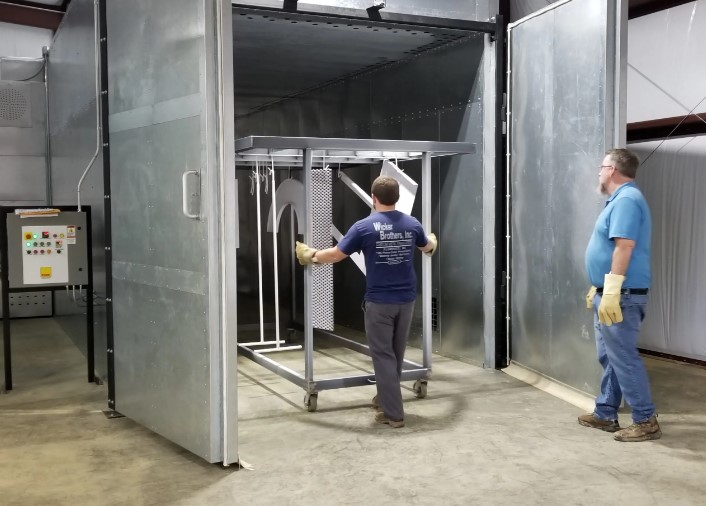
Industrial Oven Safety: Preventing Accidents and Ensuring Compliance

Industrial Oven Safety: Preventing Accidents and Ensuring Compliance

Ensuring the safety and compliance of industrial ovens, especially powder coating ovens, is not just a regulatory mandate but a fundamental necessity to safeguard the well-being of employees and the efficiency of operations. This blog post aims to delve into the essential aspects of industrial oven safety, highlighting regulatory compliance, common accidents, safety protocols, training, and maintenance procedures.

Regulatory Compliance for Powder Coating Ovens

When it comes to powder coating ovens, adhering to regulatory standards is paramount. These ovens operate at high temperatures required for curing powder coatings, making compliance not just about legalities but ensuring a safe working environment. Regulatory bodies such as OSHA (Occupational Safety and Health Administration) and NFPA (National Fire Protection Association) set forth stringent guidelines. Compliance ensures that your operations are not only up to code but also that you’re mitigating risks associated with high-temperature operations.

Common Accidents and Hazards in Industrial Oven Operations

Industrial ovens, by their very nature, pose a variety of hazards. From high-temperature burns to the risk of fires, understanding these dangers is the first step in prevention. Common accidents include thermal burns from direct contact with hot surfaces, inhalation of toxic fumes, especially in powder coating operations, and fire hazards due to combustible materials. Recognizing these hazards allows for the implementation of targeted safety measures.

Safety Protocols and Best Practices for Industrial Oven Use

Implementing safety protocols and best practices is crucial in mitigating risks. This involves establishing clear guidelines for operation, including temperature controls, loading and unloading procedures, and emergency measures. Industrial ovens should be equipped with failsafe mechanisms and safety interlocks to prevent over-temperature conditions and unauthorized access. Regular safety drills and the use of personal protective equipment (PPE) also play a vital role in ensuring a safe working environment.

Training and Education for Oven Operators

A well-informed operator is your first line of defense against accidents. Comprehensive training and education programs are indispensable, equipping personnel with the knowledge to operate ovens safely and respond effectively in case of emergencies. Training should cover the full spectrum of oven operation, including start-up and shut-down procedures, emergency protocols, and the proper use of PPE. It’s also essential to foster a culture of safety where employees feel empowered to report potential hazards.

Maintenance and Inspection Procedures for Industrial Ovens

Regular maintenance and inspection are critical to the safe operation of industrial ovens. These procedures not only ensure that the ovens are functioning optimally but also help in identifying potential issues before they escalate into major hazards. Maintenance checks should include inspecting electrical components, ensuring thermal insulation is intact, and verifying that ventilation systems are working correctly. Moreover, a well-documented maintenance log helps in tracking the oven’s condition and compliance with safety standards.

In conclusion, the safety and compliance of industrial ovens are multifaceted issues that require diligent attention to regulatory standards, awareness of potential hazards, the implementation of best practices, comprehensive training, and regular maintenance. By focusing on these critical areas, organizations can significantly reduce the risk of accidents and ensure a safe, compliant operation. Remember, safety in industrial oven operations is not just a regulatory requirement but a moral obligation to protect those who operate them.

Do You Know Which Benefits Are Most Important to Employees?

Do You Know Which Benefits Are Most Important to Employees?

If you are a benefits broker by trade, you know that the best way to sustain your book of business is to be a hero to your clients. And to do that, you need to put together benefits packages that make employees happy. This all leads to an important question: do you know which benefits are most important to employees?

Knowing what employees want is critical to your success. If you don’t know, your ability to respond is nonexistent. Putting together the right benefits package for each client becomes a matter of guesswork. However, you do not have to guess. Just do a bit of research.

Traditional Benefits Top the List

A good place to start your research is the annual U.S. Employee Benefit Trends Study from MetLife. Brokers can download the report directly from the MetLife website. As for the 2023 report, it offers both expected responses and surprises. On the expected responses side, three of the benefits employees want are pretty predictable:

  • Health insurance – 79{84e9027338ac118e61b7a11468c2fb9bdf486e7dce2d96ed5805a3fcf6c042ea} say it is non-negotiable.
  • Paid leave – 77{84e9027338ac118e61b7a11468c2fb9bdf486e7dce2d96ed5805a3fcf6c042ea} say it is not negotiable.
  • 401(k) or other retirement plan – 75{84e9027338ac118e61b7a11468c2fb9bdf486e7dce2d96ed5805a3fcf6c042ea} say it is not negotiable.

These three have been a staple of employee benefits packages for decades. The one surprise here is that paid leave beat out the 401(k) plan this year. The difference between the two is a mere two percentage points, but it is still telling that people are more interested in the short-term benefit of paid time off as opposed to a long-term benefit that could secure the future.

Top Five Voluntary Benefits

Once a broker gets beyond traditional benefits, voluntary benefits come into play. BenefitMall, a general agency based in Dallas, says voluntary benefits are playing a greater role in hiring and retention. They constantly encourage brokers to do a better job at offering voluntary benefits.

So what are the top five? According to the MetLife study, they are as follows:

1. Dental Insurance (73{84e9027338ac118e61b7a11468c2fb9bdf486e7dce2d96ed5805a3fcf6c042ea})

Dental insurance isn’t too far behind the 401(k) in terms of how many employees deem it nonnegotiable. This shouldn’t be a surprise given the fact that dental care is promoted as equally important as the rest of healthcare. People want to take care of their teeth. Give them the means to do so and many will.

2. Vision Insurance (70{84e9027338ac118e61b7a11468c2fb9bdf486e7dce2d96ed5805a3fcf6c042ea})

Next in line is vision insurance. A typical vision plan allows subscribers to obtain one new pair of eyeglasses or contact lenses per year with either no payment or a minimal co-pay. Annual exams are often included as well.

3. Life Insurance (63{84e9027338ac118e61b7a11468c2fb9bdf486e7dce2d96ed5805a3fcf6c042ea})

Life insurance was ranked as nonnegotiable by a surprising 63{84e9027338ac118e61b7a11468c2fb9bdf486e7dce2d96ed5805a3fcf6c042ea} of the study participants. In most cases, employee-sponsored life insurance involves term insurance good for the duration of employment.

4. Disability Insurance (60{84e9027338ac118e61b7a11468c2fb9bdf486e7dce2d96ed5805a3fcf6c042ea})

Both short and long-term disability insurance replaces lost income when a worker is kept out of work by a serious illness or injury. It has become more important since the start of the COVID pandemic.

5. Critical Illness Coverage (51{84e9027338ac118e61b7a11468c2fb9bdf486e7dce2d96ed5805a3fcf6c042ea})

The fifth voluntary benefit in the MetLife survey is the defined-benefit pension. Because such pensions are almost always limited to government employees, we’re going to jump to the next in line: critical illness coverage. A critical illness benefit is a cash benefit paid when a subscriber is diagnosed with one of a small number of critical illnesses. Cancer is on that list.

Knowing what employees want in terms of their benefits provides the foundation on which brokers can build winning packages. Not knowing leaves brokers to guess. Which strategy do you think is more effective?

Roman Semiokhin: Readying Your Company for Global Expansion

Roman Semiokhin: Readying Your Company for Global Expansion

Roman Semiokhin is an experienced entrepreneur and business leader with in-depth knowledge of the gaming, education, real estate and tech industries. This article will run through aspects to consider for companies expanding their operations internationally.

For companies that are prepared to venture beyond their own city, state or national borders, it is possible to increase their target audience exponentially, driving up sales in the process and taking their business to the next level.

However, in the rush to show the world what they have to offer, many enterprises fall into the trap of biting off more than they can realistically chew. It is crucial for business leaders to conduct careful research and due diligence, narrowing down their markets of opportunity and identifying which are the most viable for what their company has to offer. To achieve this, they must weigh up a variety of different factors, including the size of the market, geographical constraints, legal regulations, cost efficiency and resource and labour supply.

In preparing to expand across international borders, companies need to be culturally sensitive. All content, be it corporate literature or a website landing page, needs to be created with a customer-centric approach. Businesses need to consider how they can engage with target audiences in a new country. Rather than merely replicating strategies that worked at home, they need to invest in learning what will work abroad, as creating an emotional connection with consumers is even more challenging for foreign brands.

In order to overcome these challenges, it is crucial for expanding businesses to enlist the help of local experts, providing the benefit of their insights and local knowledge on how the business should best go about engaging with its target audience. Accepting their help on everything from social media to website content can help avoid in embarrassing cultural faux pas. Take for example MENSA, the world’s oldest and largest high-IQ society. Rather than being recognised as an international society of people with high IQ’s, MENSA’s direct translation in Spain is ‘stupid woman’. In Germany, on the other hand, the word means ‘cafeteria’.

Businesses branching out overseas need to learn the language, since language barriers can impede their global reach. Business owners cannot assume that global audiences understand content published solely in their native tongue. At a bare minimum, companies should invest in location-detection tools, converting website content into other languages for visitors from other countries. Savvy business leaders seeking overseas expansion enlist the help of translators, generating multiple versions of websites and providing content in different languages. Alternatively, many businesses start out by expanding their operations in countries that share the same native language until they feel ready to take on other languages.

Companies considering venturing into foreign markets need to develop strident localisation strategies, creating a solid plan for adapting products, content, marketing, messaging and branding to meet the needs of a whole new demographic. Effective localisation strategies cover many different aspects of planning, including cultural customisation, language translation and design modifications to ensure that products are relevant and appeal to local customers.

In order to deliver remarkable customer experiences, localisation must be prioritised at a tactical level within business initiatives and projects. In addition, localisation must also be represented in high-level strategic discussions.

Localisation marketing requires a deliberate decision to invest resources in scaling marketing efforts through localisation. Businesses may do this in tandem with other measures, such as launching locally driven campaigns and creating native content. Alternatively, they may lean on localisation as their primary method of marketing in another country.

The term ‘localised marketing’ generally refers to any process through which messages are created to appeal to other markets. Localised marketing goes beyond mere messages. Its ultimate goal is to adapt an entire customer experience to make it more appealing for consumers in another country.

One of the most significant decisions a company can make is how it wants its staff to communicate with each other. Developing a corporate language strategy is critical to breaking down communication barriers, paving the way for the creation of a truly global and collaborative company. This is a strategy that must start from the top, filtering down to every level and every employee. It is worrying to note how many international organisations lack a language strategy, potentially culminating in chaotic and inefficient working environments.

Transforming a small business into a multinational organisation is a complex and ambitious undertaking that requires business leaders to gain a deep understanding of their target markets, the competition and current local market trends. In addition, decision-makers need to learn about cultural differences in terms of regulations, language and local customs.

For small businesses, ‘going global’ is an ambitious undertaking that offers scope to disrupt existing business activities. Therefore, it is crucial for business leaders to conduct careful research, weighing up the possible impact on their business, to determine whether the rewards outweigh the risk.

To learn more about this topic, visit Roman Semiokhin’s website: https://romansemiokhin.com

JPMorgan Chase CEO Jamie Dimon says Ukraine invasion is a top economic concern

JPMorgan Chase CEO Jamie Dimon says Ukraine invasion is a top economic concern


New York
CNN
 — 

The war in Ukraine and US-China relations are two of JPMorgan Chase CEO Jamie Dimon’s biggest economic considerations, he stated Monday.

“The matter I fret the most about is Ukraine,” he informed Bloomberg Tv in an interview Monday morning. “It’s oil, fuel, the leadership of the world, and our partnership with China — that is significantly additional severe than the economic vibrations that we all have to offer with on a working day-to-working day foundation.”

Russia’s invasion of Ukraine started far more than a yr ago and has roiled the worldwide overall economy, main to electricity and foodstuff cost shocks, alongside with international provide chain disruptions that fueled surging inflation throughout the earth and led to painful interest fee hikes from the world’s central banking companies.

“This is the most critical geopolitical issue we’ve had to deal with due to the fact Entire world War II,” Dimon reported Monday, also highlighting the war’s impression on relations with China.

Beijing enjoys a near connection with Moscow, and the Chinese governing administration has been obtaining Russian electrical power and providing machinery, electronics, foundation metals, cars, ships and aircraft, throwing the Kremlin an economic lifeline.

In modern months, tensions among the United States and China have amplified as the nations around the world contend for dominance of the microchip business and argue more than tariffs, US aid for Taiwan and possible spy balloons.

Dimon claimed JPMorgan Chase is having an lively function in strengthening the romantic relationship in between the United States and China by advising and participating with the two governments on holding cordial relations. He’s hoping that “cooler heads prevail” but he does not feel a organization alternative exists to ease developing disputes. Though JPMorgan Chase does a fair share of enterprise with Beijing, it is the government, not non-public business, that has to smooth tensions, he explained.

“We probably must have started off resetting this 10 many years ago,” he claimed. The US government has to sit down and have a “very major dialogue with the Chinese govt,” he claimed.

Dimon added that he believes the war in Ukraine could continue on for many years to arrive.

On the property front, Dimon is nonetheless holding out hope for the risk that the Federal Reserve can execute a delicate landing — reducing interest fees while steering clear of recession. But over-all, his outlook stays cloudy.

“A moderate economic downturn is attainable, a harder recession is possible,” he stated Monday. “I think there’s a very good prospect that inflation will occur down, but not more than enough by the fourth quarter — the Fed might actually have to do extra,” he explained.

Dimon did be aware that the US client is nevertheless quite healthy: Residence selling prices and wages are significant, households continue to have additional funds in their lender accounts than they did in advance of the pandemic and they’re still expending it.

Buyers are in good form, he stated. “But that’s going to close at some issue.”

Nonetheless, even if The united states does enter a economic downturn, he mentioned, individuals are much more powerful and will be equipped to improved endure a downturn than they were being in 2008.