Do you feel like you know enough about money to get by? A newly released survey by the TIAA Institute shows that people of all ages and experience levels could answer only 50{ac23b82de22bd478cde2a3afa9e55fd5f696f5668b46466ac4c8be2ee1b69550} of financial literacy questions correctly! Your level of knowledge in the financial world can have big ripple effects, especially when preparing for retirement.
As financial professionals, we advise clients from a wide range of financial levels. So, we’re sharing our top retirement planning tips for retirees nearing their golden years.
‘Plan ahead to maintain your standard of living in retirement.’
As you begin to consider retirement, take a thorough review of your monthly expense needs. When many people retire, they want to maintain the same standard of living or even increase it! Which is why retirees need a plan.
A retirement plan is a written income plan that includes income and tax planning, Social Security strategies and long-term care and estate plans. Start saving early to ensure you have enough money in your accounts to sustain your lifestyle in retirement. The U.S. Department of Labor reports if you save $6,000 each year and earn a 7{ac23b82de22bd478cde2a3afa9e55fd5f696f5668b46466ac4c8be2ee1b69550} return on your investment, you will have $150,774 after just 15 years. If you add an additional 10 years of savings, that number jumps up to $379,494, proving why starting early can set you up for success.
You should also plan for shifts in the market and inflation to avoid getting caught off guard. Since March, inflation has hit a couple of 40-year highs. While many are feeling it at the gas pump and grocery store, retirees are concerned about the implications on their nest eggs. For years, many retirement planners have suggested retirees add a 3{ac23b82de22bd478cde2a3afa9e55fd5f696f5668b46466ac4c8be2ee1b69550} annual inflation rate to their plan, but it might not hurt to raise that rate. Talk with your financial planner about adjusting your plan, so you don’t run out of money when it’s time to leave the workforce.
‘You’re still going to be paying income taxes, maybe more than you think.’
One of the most common mistakes that some people make is assuming they will be in a lower tax bracket in retirement, but some retirees find themselves in a higher tax bracket. Distributions from retirement accounts like traditional IRAs or 401(k)s are considered taxable income. Depending on how much you plan to withdraw, you could be bumped into a higher bracket.
Another reason for a potential increase in your tax liability is having fewer deductions. You won’t be able to claim your children as dependents, and if your home is paid off, you won’t be able to deduct the interest from your mortgage.
There are tax strategies that will minimize taxes in retirement. One way is to consider a Roth conversion. This method will shift money from a traditional retirement account to a Roth IRA, which allows your money to grow tax-free. The one drawback is that you will need to pay the taxes on that money at the time of the conversion.
You can avoid larger taxation on your benefits by keeping your income under the tax thresholds the IRS lays out. An effective way to do this is by using a Roth IRA or Roth 401(k). This retirement account isn’t subject to taxes because the funds were taxed when you contributed. As long as you wait to take distributions until you are at least 59 ½ years old, these payments won’t affect your taxable income.
Education is key to preparing for life outside of the workforce and reaching your retirement goals. Don’t be afraid to ask your financial adviser questions or even get a second opinion. This is your retirement plan, and you should feel like you have every resource available to make informed decisions. Don’t be afraid to think big, dream big and plan ahead of time!
This article was written by and presents the views of our contributing adviser, not the Kiplinger editorial staff. You can check adviser records with the SEC or with FINRA.
Founder & CEO, Drake and Associates
Tony Drake is a CERTIFIED FINANCIAL PLANNER™and the founder and CEO of Drake & Associates in Waukesha, Wis. Tony is an Investment Adviser Representative and has helped clients prepare for retirement for more than a decade. He hosts The Retirement Ready Radio Show on WTMJ Radio each week and is featured regularly on TV stations in Milwaukee. Tony is passionate about building strong relationships with his clients so he can help them build a strong plan for their retirement.
Classic strategies of economical schooling instruct young ones to save for college or university, preserve for a house, and preserve for retirement. It is a message that feels out-of-date to younger people who see their friends reach prompt fame and fortune on TikTok and Instagram.
So Local community Credit Union Florida turned to a new pool of experts to assist it attain probable Gen Z users: influencers.
The $1.02-billion asset credit rating union, which was shaped underneath a point out constitution by a team of 10 instructors in 1953, has introduced an instructional plan called 321 Economical Liftoff showcasing speakers these as TikToker and Instagram influencer Emily Zeck, who talks about how she parlayed her social media persona, That Pineapple Female, into a branded swimwear line.
It also characteristics J.T. Hassell, an NFL free of charge agent who has performed for the Cleveland Browns and the New York Jets, and Alyssa Carson, who at 17 acquired an utilized Astronautics certification that will permit her to do research missions in suborbital space.
“Teens have to have to know there are selections,” claimed Laurie Cappelli, president and chief govt of the credit union. “They want to know that you do not have to have a university degree in purchase to thrive.”
The title of the 321 software will come from the Space Coast’s place code — it is dwelling to the Kennedy Space Middle and Cape Canaveral Place Drive Station — and is a nod to launching students’ fiscal journeys.
The 51,000-member credit rating union is dependent in Titusville, Florida and is achieving out to juniors and seniors in Brevard County substantial universities with 321. In earlier yrs, CCU Florida has made available this kind of economical literacy programs as the Income Masters Youth Personal savings Account to encourage elementary university college students to commence conserving, and has partnered with the local chapter of Junior Accomplishment to train budgeting, knowledge school fees, and how to fill out money help purposes.
Tracy Almeda-Singian, who was vice president of promoting at CCU Florida and is now a global head of expertise acquisition at Citi, spearheaded the initiative which functions youthful, nearby influencers who speak about their individual fiscal struggles and lessons learned.
Two local entrepreneurs also talk on the panel to impart advice on how to run a compact company. Branden Sewell is the proprietor of Seal Pro Painting and his 5-calendar year-old company will attain seven figures in profits this calendar year. Tinasha Dorsey labored in human methods prior to opening her have nail salon in 2019.
In the U.S., the Gen Z inhabitants is approximated to be 68 million and signifies $140 billion in expending electric power. But achieving this entirely electronic indigenous population who grew up on smartphones and social media demands a distinct strategy.
“This generation is less mass-media oriented,” stated Steve Reider, president at Bancography, a economical companies consulting firm. “You have to have to use underground promoting tactics to get to these customers.”
CCU Florida’s conclusion to recruit influencers to join with Gen Z consumers is a good transfer, Reider stated.
According to Kantar, a information analytics and brand consulting agency, 44{ac23b82de22bd478cde2a3afa9e55fd5f696f5668b46466ac4c8be2ee1b69550} of all Gen Z shoppers produced a acquiring determination based on the recommendation of an influencer, in contrast with 26{ac23b82de22bd478cde2a3afa9e55fd5f696f5668b46466ac4c8be2ee1b69550} of the general inhabitants.
“It resonates with them to have trustworthy voices outlining that this is complicated, and it is okay not to comprehend,” Reider reported. And, he adds, given that the part of promoting is to “put you into a choice established,” the 321 collection is sending the message to Gen Zers that “maybe you really do not have a have to have now, but when you do, we are in this article to assist.”
The 321 events are largely unstructured. The influencers introduce themselves, talk about their careers and their life encounters, and subject questions. “It’s a no-retains-barred dialogue. The influencers are pretty open and sincere about their stumbling blocks,” claimed Capelli.
The learners who go to the periods receive a $100 refer-a-friend coupon, a parental info packet, a CCU t-shirt and a moon person sticker. They can also open up a checking account and obtain a $100 enrollment reward.
There has been an uptick in new accounts opened by students, but the credit score union has not compiled any info yet because it has only held the inaugural 321 occasion in March, Capelli reported. But there are three additional scheduled for this 12 months, and Capelli claimed the method will carry on for the foreseeable long term.
“It’s these a sharing and incredible atmosphere,” she claimed. “The learners are a great deal much more engaged and open up about speaking about finances if it’s a peer speaking to them fairly than a mother or father.”
Executing on its options to seek strategic choices to maximize shareholder value
CHANDLER, Ariz., May well 26, 2022 /PRNewswire/ — Zovio (NASDAQ: ZVO), an training technological innovation providers enterprise that companions with increased training and businesses, introduced development on its strategies to reset and turnaround the organization. Considering that using the helm of Zovio in December, Hendricks has executed a sequence of decisive actions to set the firm on a route to increase operational overall performance and bolster its fiscal position.
Particular steps taken by the organization include things like:
Improved the administration group and organizational construction to travel superior effectiveness and agility to satisfy client’s requires.
Producing progress with its strategic initiatives to stabilize and increase enrollment at the University of Arizona International Campus.
Continuing to cut down charges to be extra in-line with its revenues.
Positioning Fullstack Academy for strong and sustainable advancement and enlargement.
Completed the divestiture of TutorMe.
Getting and subsequently repaying bridge financing, leaving the company credit card debt cost-free.
Continuing to evaluation strategic options that will make the biggest benefit for shareholders, together with further divestitures of the firms it operates.
“The actions we’ve taken over the final few months such as the recent TutorMe divestiture represent meaningful actions in boosting our financial adaptability to execute on our turnaround system,” Zovio CEO Randy Hendricks explained. “Although I’m pleased with our development our function is not full and we will continue to focus on how very best to provide our clientele, and their students, and to make benefit for our shareholders,” Hendricks ongoing.
Zovio (Nasdaq: ZVO) is an schooling know-how companies business that companions with greater education and learning institutions and businesses to supply revolutionary, personalised options to support learners and leaders accomplish their aspirations. The Zovio network, including Fullstack Academy, leverages its core strengths to solve precedence market place wants via training technologies providers. Applying proprietary sophisticated info analytics, Zovio identifies the most significant strategies to enrich the learner knowledge and deliver solid results for bigger education and learning institutions, companies, and learners. Zovio’s purpose is to help every person be in a class of their possess. For much more data, visit www.zovio.com.
Three days before Christmas, the founder of a private school with global ambitions sent a bombshell note to families, faculty and staff of the D.C. campus. Paychecks for employees of Whittle School & Studios were a week late, Chris Whittle disclosed, and the financial situation looked dire. It was unclear whether classes would resume after the winter break.
“It has been 7 years since we began work on the school and this is the most worried I have ever been that we may not be able to continue and to fulfill what we all set out to do,” Whittle wrote to his D.C. community. He appealed to investors, friends and families for emergency help.
The school survived that scare, with parents pitching in to help cover the payroll. It plans to hold its first D.C. graduation this week for 14 students in the Class of 2022 — a milestone for an educational start-up that has struggled to live up to grand promises.
Uncertainty hangs over the Whittle School nearly three years after it opened in Northwest Washington with about 185 students in tandem with a sister campus in China. It now enrolls fewer than 130 in a cavernous building on Connecticut Avenue that was once envisioned as a futuristic campus for more than 2,000 students from prekindergarten through high school, including boarders.
Whittle, an education entrepreneur who critics say delivers more rhetoric than results, had pitched the for-profit venture in 2018 as “the first global school.” Targeting a high-end market, it would operate in multiple cities on multiple continents with a common faculty. The interdisciplinary curriculum would emphasize experiential learning, foreign language skills and “a collective intelligence.” It would charge tuition of more than $40,000 a year.
Private school with global designs to open in D.C. and China
For now, Whittle has a humbler goal: to stay open in Washington, his only active campus in the United States. Tuition discounts are plentiful. He said he is optimistic the school will operate in the fall, but he declined to make a guarantee.
“Do you realize how many times I’ve been asked that question?” he said in a telephone interview this month. “Not just of this fall, but the prior fall and the prior fall. We’ve literally been asked that question for every fall. What everyone wants to hear — they want to hear ’100 percent.’ And that is dishonest.”
As evidence of viability, he cited $30 million in loans and investments that have kept the school running in Washington while Whittle seeks to raise a major new round of investments to put it on stable footing. The “bridge financing,” as he calls it, shows the venture is withstanding scrutiny. “People don’t do that casually,” he said. “That’s not something that people just wire.”
Still, some parents have given up.
“We didn’t want our kid to be left with no school at all,” said one who pulled his child out this year because of the school’s financial troubles. He spoke on the condition of anonymity, citing a desire to protect the privacy of his child. But he said he was not unhappy with the education. “Up until the moment we left, I never had a problem with the teachers. I never had any problem with the model or the way my kid was learning. We were planning to stay.”
Graduating seniors, well aware of the upheaval, praise the school’s Chinese language instruction and hands-on approach. “I’ve never felt like my academic experience has suffered,” said Calla O’Neil, 18, who is headed in the fall to Georgetown University.
“We’ve had the opportunity to start a lot of things,” including a debate team and student government, said Charlotte Weir, 18, another senior. “There’s a lot of value in learning those lessons. For me, it definitely helped me get to college.” She plans to attend the University of St. Andrews in Scotland.
O’Neil, Weir and classmate Rachael Muresan, a boarder from Tennessee, gave a brief tour of the school one recent morning, showing off the renovated interior of the aluminum-and-glass structure once known as the Intelsat building. Sunlight streamed through the roof. Classrooms rose in a multistory stack around an atrium.
On a lower level, young children in helmets rode tricycles and scooters around an octagonal courtyard. Above them, older students worked in an art studio and other classrooms. A striking gymnasium occupied a higher level, with a blue “W” for Whittle centered on the hardwood floor of a basketball court.
“I was on the team,” O’Neil said. For every basketball game, she said, the stands “were completely filled.”
Her father, Michael O’Neil, is involved in efforts to stabilize the school’s finances. He said he understands why parents are asking hard questions. “These are very personal, very serious things,” he said. “Nothing’s more important or more emotional than trying to figure out what is right for your family and your children.”
When Whittle School opened, it sought to make a splash in a regional market with numerous tuition-charging competitors, from Catholic schools to Sidwell Friends School to Edmund Burke School, just across Connecticut Avenue in the Van Ness neighborhood. Some families were lured to Whittle’s progressive vision of education. They were unfazed by its for-profit structure, as a business incorporated in the Cayman Islands.
Most private schools in the United States operate as nonprofit or religious institutions. But Whittle said his arrangement was simply a way to raise enough money to accomplish the school’s vast goals. He talked of opening 36 campuses in 15 countries within a decade. The debut campus in China, known there as Huitong School, launched in 2019 in the city of Shenzhen.
Midway through the first school year, the deadly coronavirus emerged. Campuses shuttered everywhere, including Whittle’s.
“He opened his doors and got hit by a tsunami,” said Thomas Toch, a research professor at Georgetown’s school of public policy and an expert on the region’s private school market. “The pandemic shut the school down six months after its opening.” Rising tensions between the United States and China also hurt the enterprise, Toch said. “Those things made it really difficult to be successful.”
Whittle said the Shenzhen campus has drawn about 1,000 students, and another will open soon in the Chinese city of Suzhou. But it is unclear how or whether the apparent momentum in China can boost the D.C. campus. Whittle said the school is navigating “a new regulatory environment in China” but declined to elaborate.
The pandemic dealt a formidable blow to his launch plans, he said, derailing the development of a Brooklyn campus, delaying other expansions and leading investors to abruptly withhold $60 million that had been committed to the enterprise. He said an almost-done deal for another $40 million also dissolved in early 2020. The net result: $100 million had suddenly vanished from the school’s grasp. That was more than a third of the total investment ($270 million) Whittle had been counting on at the time.
Marketing plans were hobbled as the school, like others, was forced to operate remotely for months. “I’ve been through my ups and downs in the past 50 years, but nothing compared with this,” he said.
The master salesman of for-profit education
Whittle, 74, is controversial in the education world. In 1989 he launched Channel One, a news program for schools that critics said exposed students to too much commercial advertising. In the early 1990s, he co-founded Edison Schools, a for-profit venture that sought to improve public schools through better management. Edison’s record, financially and educationally, was mixed. But it provided significant early support to the charter school movement, including Friendship Public Charter Schools in the District.
In 2012, Whittle led the opening of Avenues: The World School in New York, another private school venture. He left three years later, for reasons he declined to explain, but Avenues continues to operate in Manhattan and has programs in Sao Paulo in Brazil and in Shenzhen.
For his latest big idea, Whittle assembled a high-powered team of educators and advisers. Among them were Nicholas Dirks, former chancellor of the University of California at Berkeley, and Jim Hawkins, former headmaster of the venerable Harrow School in England.
“Chris had a really compelling vision for not only a great school, but a great network of schools,” said Tom Vander Ark, a prominent education consultant and former school superintendent, who until 2019 chaired an educational advisory board for Whittle. “Like everything Whittle does, it was grand and initially well-resourced. I think in the end, he ran out of money for a variety of reasons, including but not limited to the pandemic.”
Some of the big names, including Dirks and Hawkins, have left the company’s top level. There has been churn, too, at the D.C. campus. Manuel J. Rivera, who had been global head of faculty recruitment, last year became head of the campus.
“Yeah, it’s been challenging,” Rivera said in an interview. But the campus continues to operate, he said, and it is recruiting for the fall. A top priority is to draw international boarding students.
“We’re small now. There are advantages to being small,” Rivera said. “And we’ll be small again next year. That’s a given.” He hopes to enroll 150 to 200 students in the fall, calling that a “reasonable, achievable” number.
Several parents who pulled their children from the school declined to discuss their reasons for the record. One expressed dissatisfaction with the curriculum; others worried about faculty turnover and the school’s finances.
Whittle defended the quality of education the school has provided but acknowledged some parents are skittish. He said he has sought to keep them informed about financial realities, opting for a policy of transparency in a bid to secure as much support as possible from the parent community.
On March 1, for example, Whittle provided families with an update on negotiations with potential investors. He expressed optimism that “we are on a path to concluding this capital program within 30 days, with 45 days being the latest,” according to a copy of a letter that a parent provided to The Post. He added: “I want to thank you for your immense patience as I know how anxiety-producing these days have been. I also know that you may be thinking ‘is it really going to happen this time.’ The answer is the four of us believe, if we stick together and continue the good progress of the past few days, yes, we will succeed!”
As of this week, Whittle acknowledged to The Post, the long-term investments he is seeking had not yet been concluded. He cited progress, including the refinancing of a building loan, which removed a foreclosure threat that had shadowed the property where the school is based. (The school is a tenant.) A broader capital package, he said, “is what we’re working on literally at this moment.”
Transparency is a “doubled-edged sword,” Whittle said. It can lead parents to demand more information even when deals haven’t been fully executed, contributing to a sense that financial stability is perpetually elusive, always just around the next corner. “You just can’t believe how difficult that has been,” Whittle said.
But transparency did help solve the payroll crisis in December. “I was really struggling,” he said, “and families stepped up. It was a nice Christmas Eve in that regard.”
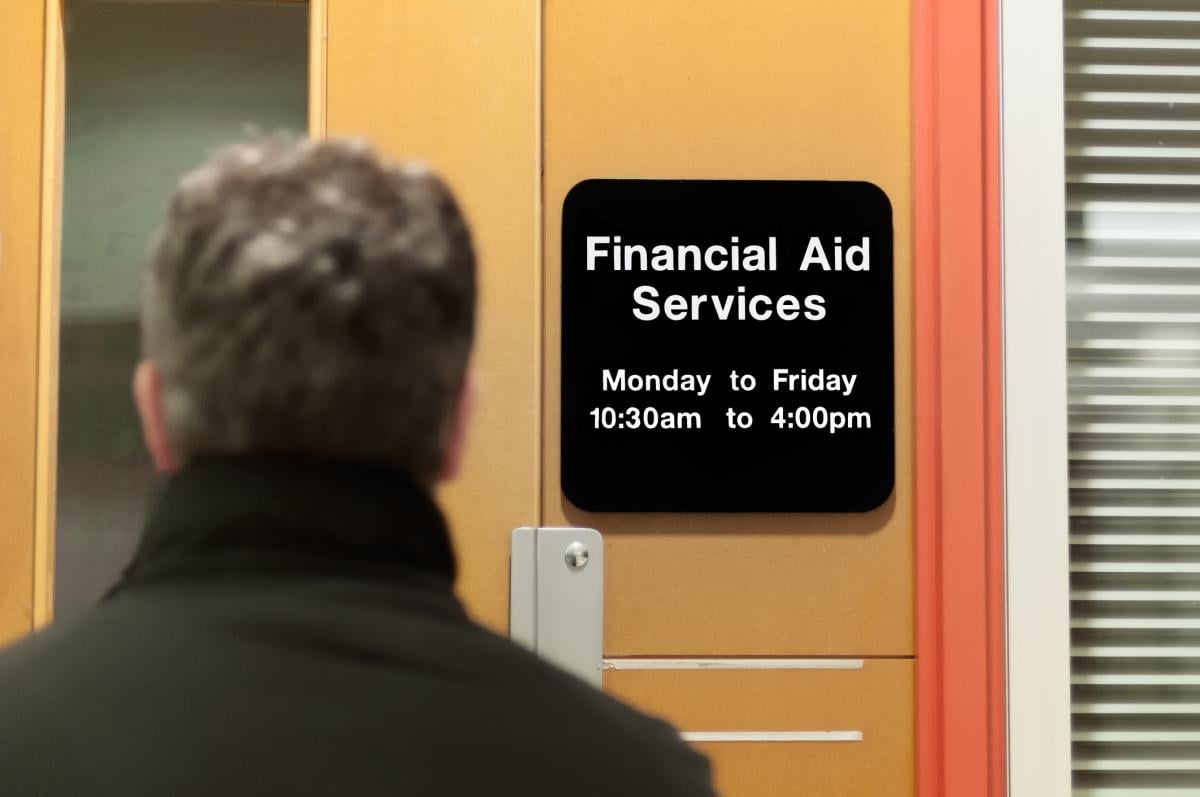
Expanding staffing shortages at school fiscal aid workplaces have been a place of concern all through the pandemic. According to a the latest survey, reduced ability, superior turnover rates and issue selecting about the earlier two yrs have institutions concerned about prolonged-time period impacts, including the potential to satisfy federally mandated staffing needs.
In accordance to a the latest survey of 500 institutions produced right now by the Nationwide Association of Scholar Money Support Directors, 80 percent of respondents indicated that they ended up anxious about their economical help offices’ ability to stay “administratively capable” in the long term to access Training Office requirements for Title IV plans, plus Pell Grants, Supplemental Academic Option Grants and federal scholar financial loans.
What’s a lot more, 56 percent of respondents claimed they were being anxious with their capability to fulfill the wants of learners presented their recent employees ranges.
“We are sounding the alarm bells that lots of monetary help places of work are critically brief-staffed, which could produce cascading troubles for individuals schools and universities, equally in their means to adequately serve pupils whilst also remaining compliant with federal and state principles,” said NASFAA president Justin Draeger.
What Is Driving the Staff Shortages?
Retention and employing issues at fiscal assist workplaces mirror more substantial traits across the world wide economic system, driven by pandemic-induced inflation, job market alterations and stagnant wages. In the monetary support sector, selecting and retention concerns predated the pandemic and have become a most important issue as the demand for economical aid aid from battling pupils has improved due to the pandemic.
The NASFAA study discovered that 50 {ac23b82de22bd478cde2a3afa9e55fd5f696f5668b46466ac4c8be2ee1b69550} of responding institutions with at minimum a single emptiness were being operating at 75 percent staffing ability in the award a long time 2019–20 and 2020–21. This has led to a minimize in fiscal aid offices’ skill to service students’ essential economic guidance desires, such as supplying facts on obtainable help and financial loan repayment, as well as helping college students in need to have of emergency fiscal support.
“We’ve got our individuals unfold really skinny. We don’t have plenty of people to solution the telephones. We do not have sufficient folks to service the college students through the digital expert services, and we get additional strains at our campuses,” claimed JoEllen Rate, the govt director of money help at Houston Group College.
According to the NASFAA study, 69 percent of total-time staff members who still left the sector did so to acquire a job with a increased wage or much better advantages. As fiscal help workplaces reduce staff members thanks to resignation and retirement, they are having difficulties to draw in skilled workers, foremost to shortages in staff.
Of people surveyed, 43 percent reported that it was “very difficult” to fill vacant positions with competent personnel.
“In financial support, you can’t exchange anyone that promptly. It typically will take a yr or two for a economical assist counselor to seriously comprehend everything,” mentioned Wayne Kruger, government director of economical support operations at St. Petersburg Faculty in Florida. “When a counselor retires that is been there 30 decades, you just really do not get anyone off the street to substitute them.”
Not only are monetary assist places of work having difficulties to fill counselor positions, but they are also suffering from problem acquiring candidates to fill entry-degree positions that are normally made use of as stepping-stones to the bigger-amount counseling positions. In accordance to Price tag, federal perform-analyze positions in financial support workplaces are generally feeders that spot previous scholar workers in entry-level money support business positions. Nevertheless, get the job done-research participation has sharply declined considering that the pandemic.
“Prior to the pandemic, we experienced no complications using the services of operate-research learners that could help us with our services to other learners,” claimed Rate. “But we’re getting difficulty finding college students to operate in these positions.”
Each Value and Kruger indicated that they have elevated the wages of get the job done-research positions in their offices in an effort and hard work to attract college students. These attempts, nevertheless, have not spurred sufficient desire to fill the latest need.
Draeger said that establishments that are heavily dependent on enrollment are struggling the most to keep financial support place of work staff members, particularly offered decreases in earnings from enrollment declines all over the pandemic. These involve neighborhood schools, open-accessibility 4-12 months schools and some very low-price personal establishments.
Federal Compliance
Even though problems with staffing in increased education are not unique to economic aid offices, Draeger noted that it is essential that these shortages be dealt with, because they could possibly jeopardize an institution’s ability to continue being in compliance with the administrative functionality demands outlined by the Education and learning Section to qualify for Title IV systems, which consist of most student help packages funded by the federal government.
Draeger defined administrative capacity as the federal governing administration saying “a faculty has to spend sufficient cash and means in its assist office so that they have ample staff members to sufficiently administer the programs and that they are obtaining ample money to be trained on an ongoing basis on adjustments in Title IV guidelines and polices.”
If institutions fall short to fulfill these administrative capacity specifications, they could facial area money penalties or lose their ability to qualify for federal funding below Title IX scholar assist plans.
The federal authorities has peaceful some of the administrative demands that normally dictate Title IV eligibility due to the fact the get started of the pandemic to allow for financial support places of work to have a lot more versatility with staffing. On the other hand, the persistence of staffing shortages has designed some in economical help offices nervous, because after the federal government declares the pandemic is over, these specifications will be reinstated.
Only 61 percent of these surveyed felt they had the methods to keep on being in compliance with administrative capability needs outlined by the Schooling Office.
According to Selling price, the Instruction Division has been transparent in stating that it will give economic assist offices right until the finish of the payment interval after the finish of the nationwide unexpected emergency to appear back into compliance. Cost reported that her place of work has been getting methods to put together for these alterations.
“We are doing a good deal of cross-schooling correct now to put together staff members in case we have to do a lot more movement,” said Price tag. “It won’t be like a gentle switch going off the place all of a unexpected you have versatility now and tomorrow you really do not. So at least they put some prepared concessions into the polices that allow for us to at least lengthen it and be completely ready and program for it.”
Issue: If desire charges increase, what will usually occur to bond price ranges? Rise, fall, remain the exact same or is there no marriage? If you answered “fall,” congratulations. You are element of just 26{ac23b82de22bd478cde2a3afa9e55fd5f696f5668b46466ac4c8be2ee1b69550} of People who, when surveyed in 2018, answered that question accurately.
Whether or not or not you received that question proper may well not feel like a big offer. But that most People in america simply cannot respond to it speaks to a greater challenge: The us has a money literacy trouble.
Several scientific tests have revealed that Us citizens deficiency monetary acumen. The bond query over, for instance, is component of a six-problem money literacy quiz that addresses crucial subjects in economics and particular finance like desire fees, home loans and inflation. Only 7{ac23b82de22bd478cde2a3afa9e55fd5f696f5668b46466ac4c8be2ee1b69550} of Us citizens had been ready to reply all 6 inquiries effectively. A further study in 2020 of financial literacy between U.S. adults experienced similar final results and concluded that “many People lack personal finance awareness that allows sound financial determination building.”
There are real daily life effects for these gaps in economical acumen, notably as the state promotions with soaring inflation. Tens of millions of Americans wrestle with managing their funds, only to wind up deep in financial debt. A 2019 Bankrate survey identified that 56{ac23b82de22bd478cde2a3afa9e55fd5f696f5668b46466ac4c8be2ee1b69550} of Individuals are not able to include a $1,000 unexpected emergency price with personal savings and a LendingClub report from March of this year identified two-thirds of People in america are dwelling paycheck to paycheck. In the extended-term, a 2017 analyze from the World-wide Economic Literacy Excellence Center identified that variations in financial understanding accounted for 30{ac23b82de22bd478cde2a3afa9e55fd5f696f5668b46466ac4c8be2ee1b69550} to 40{ac23b82de22bd478cde2a3afa9e55fd5f696f5668b46466ac4c8be2ee1b69550} of retirement prosperity inequality. Throughout numerous of the scientific tests, Gen Z typically experienced the greatest gaps in financial literacy.
So what can be completed? Make own finance education accessible to college students.
As the co-founder of a economic education nonprofit that gives absolutely free curriculum to about 60,000 educators nationwide, I have heard from thousands of lecturers that their students crave this sensible mastering. A single teacher at San Marcos Significant School in San Diego County, Tara Razi, for instance, supplied a personal finance system this year contemplating she would have a single part and 40 students. She ended up with 6 sections and 220 college students. Razi’s students immediately began placing classes realized in the classroom to use in their everyday lives. Just one pupil attained a credit rating card and applied it properly, earning reward details and making a superior credit score rating. Right after finding out about compounding curiosity, yet another university student curbed her impulse shopping for and set extra of her cash in the lender for higher education. That identical compounding fascination lesson also showed a youthful person how he could make $1 million by retirement if he just socked absent a very little revenue each and every month setting up at his age.
Fortunately, policymakers are starting to value the will need for this type of training in educational institutions. In the earlier three many years, the variety of states guaranteeing fiscal education and learning has grown from five to 13. In 2022, 26 states launched costs, with virtually all of them raising obtain to monetary training. In California, AB2215 and AB2051, two charges that lately attained acceptance in the state Assembly’s Education and learning Committee, would significantly improve accessibility to monetary education and learning for California’s students by supporting educational facilities, university districts, county offices of instruction and constitution colleges employ fiscal literacy education and learning packages and make certain that extra superior college learners in California take a particular finance course right before graduating.
We will need these expenditures to come to be regulation. In accordance to my nonprofit’s 2021 yearly report on the point out of money training, the Golden State ranks 49th in terms of entry to fiscal education and learning. While 70{ac23b82de22bd478cde2a3afa9e55fd5f696f5668b46466ac4c8be2ee1b69550} of higher faculty learners nationwide have obtain to a particular finance elective or a guaranteed program, only 26{ac23b82de22bd478cde2a3afa9e55fd5f696f5668b46466ac4c8be2ee1b69550} in California do. Moreover, 1 in 3 college students nationwide attends a university that guarantees he or she will consider a own finance study course but much less than 1 in 100 has these types of assures in California.
We simply cannot pay for to allow our young children tumble at the rear of. Exploration demonstrates that college students who receive significant-top quality individual finance instruction in faculty handle their finances better as older people, resulting in fewer debt, greater credit history scores, better individual income and a better good quality of daily life total.
The gains of this kind of education aren’t minimal to the students. In the 10 several years that I taught a own finance course at Eastside College Prep in East Palo Alto, I noticed how students brought their finance lessons residence to their mother and father and guardians. Quite a few of these grownups then reached out to me eager to find out about budgeting and how to invest for retirement. In other terms, educating pupils can lead to educating an overall family members.
Some argue that personalized finance schooling is currently a considerable element of California’s point out-demanded economics training course. This is inaccurate. A quick skim of latest framework provided in a 2018 govt summary about the 12th-quality economics class or a extra detailed assessment of the state’s economics standards demonstrates it is quite really hard to see any tie-ins to private finance training.
In April, Community Plan Polling done a survey that confirmed that 85{ac23b82de22bd478cde2a3afa9e55fd5f696f5668b46466ac4c8be2ee1b69550} of Californians think a personalized finance system should really be a certain training course in higher school and 88{ac23b82de22bd478cde2a3afa9e55fd5f696f5668b46466ac4c8be2ee1b69550} indicated that this should really be resolved urgently by the Legislature. If AB2215 and AB2051 move and are signed into regulation, our nonprofit is geared up to commit $1 million in instructor expert progress so that additional college students can have a Tara Razi in their school.
We owe it to California’s college students to assure that their substantial university education and learning equips them with the competencies they have to have to thrive in the 21st century. That will not materialize with no particular finance instruction.
Tim Ranzetta is co-founder of Subsequent Gen Personal Finance.