These states are raising their minimum wage in 2023

These states are raising their minimum wage in 2023


Minneapolis
CNN
 — 

The current period of high inflation that has significantly impacted the US economy will also influence a New Year’s tradition: The annual state minimum wage increases.

By January 1, hourly minimum wages in 23 states will rise as part of previously scheduled efforts to reach $15 an hour or to account for cost-of-living changes. The increases account for more than $5 billion in pay boosts for an estimated 8.4 million workers, the Economic Policy Institute estimates.

Additionally, nearly 30 cities and counties across the US will increase their minimum wage, according to the EPI, a left-leaning think tank.

The larger-than-typical increases for a dozen states come after inflation hit a 40-year high this summer, leaving families struggling to keep up with the rising costs.

“The fact that there’s high inflation really just underscores how necessary these minimum wage increases are for workers,” said Sebastian Martinez Hickey, a research assistant at the EPI. “Even before the pandemic, there was no county in the United States where you could affordably live as a single adult at $15 an hour.”

The pandemic and the subsequent period of economic recovery has further revealed the growing chasm in America’s wealth gap. During the past two years, working conditions and low pay contributed to a swelling of labor movement activity and actions by many large corporations to raise their wage floor.

RaiseUpNY Coalition, including the Laborers Internation Union 79 and 32BJ SEIU, hold a rally at City Hall Park to fight for a higher minimum wage in Manhattan, New York, on November 15, 2022.

The pandemic also led to a structural upheaval in the nation’s labor market, creating an imbalance of worker supply and demand that still persists. Employers have found themselves short of workers for most of the year, which has pushed up average annual hourly wages in the battle to recruit and retain staff. While some workers in competitive industries such as retail and dining have found their new salary outpaces inflation, most pay has been outpaced by rising prices.

“The story is different because wages have been increasing at the low-end, much faster than inflation and much faster than in middle- or high-wage jobs,” said Michael Reich, economics professor at the University of California at Berkeley. “And that means that many workers, even in the $7.25 states, are already getting paid above the minimum wage.”

In other words, he said, the minimum wage “has become less and less binding.”

“Even though minimum wages might go up by 7{ac23b82de22bd478cde2a3afa9e55fd5f696f5668b46466ac4c8be2ee1b69550}, in many states and cities, labor costs aren’t going to go up anywhere as much as they have in the past, because they already have gone up,” he said. “That also means that prices aren’t going to go up at [places like] restaurants.”

The federal minimum wage of $7.25 per hour hasn’t budged since 2009, and 20 states have a minimum wage either equal to or below the federal level, making $7.25 their default baseline. The value of the federal minimum wage peaked in 1968 when it was $1.60, which would be worth about $13.46 in 2022, based on the Bureau of Labor Statistics’ inflation calculator.

  • Delaware: $10.50 to $11.75
  • Illinois: $12 to $13
  • Maryland: $12.50 to $13.25
  • Massachusetts: $14.25 to $15
  • Michigan: $9.87 to $10.10
  • Missouri: $11.15 to $12
  • Nebraska: $9 to $10.50
  • New Jersey: $13 to $14.13* (scheduled increase also includes inflation adjustment)
  • New Mexico: $11.50 to $12
  • New York: $13.20 to $14.20 (Upstate New York); $15 (in and around NYC)
  • Rhode Island: $12.25 to $13
  • Virginia: $11 to $12
  • Alaska: $10.34 to $10.85
  • Arizona: $12.80 to $13.85
  • California: $14.50 (firms with 25 or fewer employees) /$15 (firms with 26+ employees) to $15.50
  • Colorado: $12.56 to $13.65
  • Maine: $12.75 to $13.80
  • Minnesota: $8.42 to $8.63 (small employer); $10.33 to $10.59 (large employer)
  • Montana: $9.20 to $9.95
  • Ohio: $9.30 to $10.10
  • South Dakota: $9.95 to $10.80
  • Vermont: $12.55 to $13.18
  • Washington: $14.49 to $15.74
  • Connecticut (effective July 1): $14 to $15
  • Florida (September 2023): $11 to $12
  • Nevada (effective July 1): $9.50 to $10.25 (firms that offer benefits); $10.50 to $11.25 (no benefits offered)
  • Oregon: $13.50 (effective July 1, indexed annual increase to be based on the CPI)

Sources: State websites, National Conference of State Legislatures, Economic Policy Institute

Virginia man pleads guilty to defrauding the United States | USAO-NM

Virginia man pleads guilty to defrauding the United States | USAO-NM

ALBUQUERQUE, N.M. – Alexander M.M. Uballez, United States Legal professional for the District of New Mexico, introduced that Jerry Shrock, 47, of Meadowview, Virginia, pleaded responsible on Nov. 28 to conspiracy to defraud the United States. Shrock will remain on conditions of launch pending sentencing, which has not been scheduled.

According to court docket documents, commencing in January 2005, David Wellington, 62, of Albuquerque, and his business enterprise spouse Stacy Underwood, 51, of Albuquerque, operated Nationwide Business enterprise Solutions, which promoted, offered and designed Limited Legal responsibility Providers (LLCs) under New Mexico State Legislation. For quite a few customers, National Organization Services would open bank accounts under the names and IRS employer identification figures (EINs) of the LLCs, and the shoppers – whose names were being not affiliated with the lender accounts – would have entry to the cash in those people accounts. Clients obtained debit playing cards, on-line lender access info and pre-signed checks with Underwood’s signature, which purchasers could use to obtain the revenue in spite of the bank under no circumstances associating the client with the account.

In his plea settlement, Shrock admitted that he contacted National Small business Products and services in 2006 for support staying away from federal taxes by incorporating a small business in New Mexico. Shrock spoke with Underwood and Wellington, and turned a consumer of Countrywide Business Products and services.

Wellington and Underwood made 3 LLCs in New Mexico for Shrock: White Prime Business LLC Poultry Enterprises LLC and TALC Qualities LLC. Shrock was not mentioned on the Content of Organization. Instead, Underwood was outlined as the “Organizer,” and National Small business Expert services was the initial registered agent for every of the a few LLCs.

On Might 9, 2011, Underwood opened a financial institution account in the organization name of White Best Organization, LLC, making use of the firm EIN. Shrock’s title was not on the signature card for the account. Underwood delivered Shrock with online accessibility to the bank account and a ebook of pre-signed checks with her signature. Between Could 9, 2011, and June 30, 2015, Shrock caused approximately $4,875,940 to be deposited into the White Major Enterprise LLC bank account, and over the exact same time period, Shrock and his wife withdrew or caused the withdrawal of around $4,875,940. Between the withdrawals was a wire transfer of approximately $352,216 for the acquire of a property.

Prior to his indictment in this scenario on June 23, 2021, Shrock did not file a personal or small business tax return with the IRS reporting the White Top rated Enterprises LLC earnings. At the time of the deposits and withdrawals, Shrock experienced a substantial remarkable IRS assessment for unpaid taxes, penalties and desire. Since it was not opened in his private name, the White Best Enterprises LLC lender account enabled Shrock to crank out and deposit profits whilst evading the remarkable evaluation and preventing individual and company taxes on the profits.

Wellington was arraigned on July 9, 2021, charged with conspiracy to defraud the United States and operation of an unlicensed funds transmitting organization. Wellington remains on problems of launch pending demo, which is scheduled for June 12, 2023. If convicted, Wellington faces up to 10 decades in jail.

On Oct. 23, Underwood pleaded responsible to conspiracy to defraud the United States. Underwood is scheduled for sentencing on Jan. 30, 2023.

Underwood and Shrock encounter up to five yrs in jail.

IRS Criminal Investigation investigated this scenario. Assistant United States Lawyer Jeremy Peña is prosecuting the scenario.

# # #

States move to ban high-interest loans at pet shops

States move to ban high-interest loans at pet shops

Millie Hill mentioned it was like at 1st sight as her partner of 50 many years held a pint-dimension Chihuahua pup at a Puppyland pet shop past summer time.

Howard Hill, 95 and working with vascular dementia, was nervous about how quiet their property in Kent, Clean., may possibly turn out to be when their aging canine, Mr. B, passed absent. So immediately after hurriedly signing papers at the pet retail outlet chain, the Hills walked out with the new $4,595 pet.

When she sat down to seem at the paperwork a couple of days later, Millie Hill speedily realized her oversight: The bundle of higher-desire financial loans she’d signed would sooner or later swell to a overall price tag of additional than $19,000.

“I felt betrayed. You don’t hope this from people who provide animals and adore animals,” mentioned Millie Hill, 85, whose husband died in November. “This should really not be allowed it should really be illegal.”

A expanding refrain of condition legislatures agree and are using motion to outlaw higher-curiosity financial loans and leasing arrangements from brick-and-mortar and on-line pet shops. The specials can go away pet entrepreneurs on the hook for double or triple the value of an animal and can cripple the credit history of those people who can’t shell out up.

Illinois banned the high-curiosity loans this 12 months and California Gov. Gavin Newsom (D) signed a invoice on Monday that typically prohibits on-line pet retailers — regardless of site — from currently being involved in financing the sale of canine, cats or rabbits

A further 10 states have banned retail pet suppliers from giving leasing programs that are equivalent in value and composition to automobile leases, indicating a failure to pay out could result in a pet staying seized.

“They are preying on folks who are building an psychological decision,” stated California state Rep. Brian Maienschein (D), who sponsored the monthly bill. “These are not realistic loans, the phrases are predatory, in some circumstances doubling the value of the pet. That’s absurd.”

The founder of Puppyland, which has 6 merchants in 4 states, defended the company’s follow of using finance corporations that provide the superior-interest loans, arguing that it provides pet house owners additional overall flexibility.

“These curiosity costs are not unique to Puppyland and Puppyland has no management more than the desire fees our consumers get when working with 3rd events for financing,” Kayla Kerr stated in a statement, incorporating that the enterprise has no options to improve its loan policies. “If we ended up to suspend this possibility, it primarily narrows the decision for the customer and we would not want to do that.”

EasyPay Finance, a enterprise that provides high-interest loans by pet shops across the nation, said they allow clients who may otherwise not qualify for a regular loan to get the pet of their decision. The corporation states its bank loan costs can be as significant as 199 p.c.

“Many Us residents are left guiding by the regular banking and credit score technique. EasyPay facilitates financing selections to be certain that these consumers have a reliable and safe alternative to access otherwise unavailable credit rating for urgent demands and discretionary uses,” a assertion from the company mentioned, including that it gives “a assortment of credit history tiers based on a borrower’s credit score profile.”

Mike Bober, president of Pet Advocacy Community, a trade group that represents pet outlets, declined to remark on the use of substantial-fascination financial loans, declaring, “This concern has been lifted to us before, but our situation is that it is outside the house the scope of pet treatment.”

Some states are going a step more, banning the sale of dogs — and in some cases cats and rabbits — from retail pet outlets altogether. Backers say in addition to high priced financial loans, customers frequently conclusion up with animals that have myriad expensive and annoying health and fitness difficulties. So far, five states have enacted these pet keep bans, and New York may possibly be part of them if the “Puppy Mill Pipeline Bill” — handed by the legislature in June — is signed by Gov. Kathy Hochul (D).

Bober criticized people measures, arguing they do almost nothing to enhance the good quality of pets and damage tiny companies.

“The reality is that the impact that they have does not finish up the place it’s purported to,” Bober explained. “It’s not that these expenditures are impacting breeding ailments any place, in particular with the unlicensed unlawful breeders. In its place, what it is undertaking is developing circumstances the place compact, area businesses cannot stay open.”

Pet shops that sell high-priced puppy breeds have presented regular funding choices to consumers for a long time. On the other hand, mortgage firms accept that the newer, large-interest financial loans are aimed at customers with no or inadequate credit. And prospects and animal legal rights teams say the financial loans are pitched by gross sales workers as very affordable by focusing on the cost for every month payments verses the all round price of the pet dog. These procedures have authorized pet retailers to promote breeds that price tag 1000’s of dollars — this kind of as French bulldogs — at selling prices significantly increased than private breeders charge owing, in part, to impulse buys as people look through animals.

The Humane Modern society, Animal Lawful Protection Fund, Nationwide Purchaser Legislation Centre, and other teams say issues about triple-digit loans or leasing selections have risen in excess of the earlier a number of years. In February, the teams formed a coalition to increase public consciousness and to use pressure on government officials and agencies.

Congress has also taken motion to shut a loophole that allows the high-desire loans. Final calendar year, President Biden signed a bipartisan resolution to repeal a Trump-period rule that created it easier for finance companies to make financial loans that exceed condition desire amount caps, declaring the technique was established up to “allow creditors to prey on veterans, seniors, and other unsuspecting debtors …. trapping them into a cycle of debt.”

A congressional invoice was launched in 2019 and yet again in 2021 that would give a permanent, nationwide solution by location a 36 per cent desire level cap that covers all creditors, including banking institutions. The bill has stalled less than intensive lobbying by the financial field.

The lending and leasing methods have persisted regardless of rolling again the Trump-era rule, prompting quite a few condition attorneys general to take legal motion versus some of the pet stores and funding providers.

Massachusetts Lawyer Normal Maura Healey (D) referred to as pet leasing an “exploitive practice” when she declared a $930,000 settlement in April with a finance organization that also agreed to wave consumers’ excellent personal debt. Maryland Lawyer Common Brian E. Frosh (D) introduced a settlement in August with a pet shop that agreed to pay veterinary treatment or refund customers who purchased dogs with professional medical conditions. And the Hills’ situation and many others in Washington have triggered an inquiry by condition Legal professional Basic Bob Ferguson (D).

The point out lawyers standard probes have minimal effects, even so, because the investigations have a tendency to aim on a singular finance company or pet retail outlet and can only guard customers inside their very own states.

“Right now, this is a whack-a-mole approach that goes by loan company and by state,” explained Rachel Gittleman, a money expert services outreach manager with the Consumer Federation of The united states. “Since most of these creditors function online, it can be tough to even uncover them. There is not some storefront operation that you can quickly discover.”

When Jennifer and Jeff Bowman spotted a brindle-colored English bulldog in a Petland pet retailer in Iowa Metropolis in 2019, the pair asked a product sales clerk if they could satisfy the puppy they would later on title Zeke.

Zeke snorted and kissed them and the pair asked what it value to choose him residence. The selling price tag — $4,400 — induced speedy sticker shock.

Nevertheless, the few explained a Petland employee explained to them funding alternatives were being readily available that would assure a very low regular monthly payment. They would just have to fill out a loan software.

State fascination costs are capped at 36 {ac23b82de22bd478cde2a3afa9e55fd5f696f5668b46466ac4c8be2ee1b69550} in Iowa, so the Bowmans weren’t extremely anxious — till they got property and observed that the 90-day interest free of charge financial loan from EasyPay had an explosive clause in it. If they did not pay back off the financial loan within that time, in accordance to economical paperwork reviewed by The Washington Post, the curiosity fee would increase to 188.98 p.c.

“We ended up worried about how a great deal it would value and, although we have been speaking about it, another employee took a contact and reported it was someone who was also intrigued in the pet dog,” Jennifer Bowman stated in an interview. “I started begging my husband for us to find a way to get him. I assume they performed us for fools.”

The EasyPay personal loan was processed by means of Utah-primarily based TAB Financial institution in what consumer groups and political leaders, together with Biden, have referred to as a “rent-a-bank” maneuver, the place funding corporations approach financial loans as a result of out-of-point out financial institutions that do not have to abide by the point out-capped interest prices.

In a statement, TAB Lender defended its tactics, expressing it is a much better choice than payday financial loans and will help “consumers who have no or confined credit rating.”

Petland, which has 22 corporation merchants and 75 franchises, stopped presenting triple-digit bank loan possibilities in April 2021, reported Elizabeth Kunzelman, the chain’s vice president for legislative and community affairs, calling it “the responsible issue to do.”

In the Bowmans’ scenario, Kunzelman argued they should have been conscious of the EasyPay desire fee because they “were presented documentation of the phrases.”

Even so, data recommend that at least some other Petland outlets have ongoing to supply loans over this amount even after the store’s plan adjust.

For example, just one online video of a Petland employee this summer months at a retail store in Wichita captured a conversation with a Humane Culture volunteer posing as a shopper in which the particular person was recommended versus a triple-digit desire mortgage that the worker suggested the business was nonetheless supplying.

“If you really don’t fork out it off in just all those 90 days, you have to start paying the desire too, and their APR is like insane, like it’s, someone received it figured the other working day, like 194 p.c,” the employee stated in a online video reviewed by The Publish.

Kunzelman said the Petland franchisee — which independently owns and operates the store — advised her that the best desire rate they had been supplying at the time the online video was shot was by a enterprise credit history card at 29.99 p.c.

Specially troubling for pet house owners like the Bowmans is the anguish they expertise when the canine also comes with wellbeing issues. With Zeke, veterinary records expose a host of bodily challenges that provided a “chronic history of allergic skin ailment, gastrointestinal disturbances and respiratory troubles,” in accordance to a necropsy report done immediately after he died of renal failure at 20 months of age. The veterinarian also mentioned Zeke’s health troubles had been “a immediate result of his prior genetic and breeding historical past.”

“We would be homeless if my mother-in-legislation had not stepped in to help us financially,” Bowman said. “We did not want to give up on Zeke, we beloved him, and we preferred to save him.”

Kunzelman said the retail outlet took very seriously the grievances about Zeke’s wellbeing and reimbursed the Bowmans for their veterinarian bills and for the cost they paid out for Zeke, minus funding. The couple say Petland repaid only a part of the veterinary charges and that the ordeal even now price tag them hundreds of bucks and their credit rating also suffered.

“The retailer communicated the health-related problems and hardship back again to the breeder who agreed to stop breeding the sire and dam. The retail outlet also stopped obtaining from that breeder,” Kunzelman explained, introducing that she does not feel any other Petland store has considering that ordered from the breeder.

In several situations, proprietors finally default on their loans. Just after Zeke died, the Bowmans said they stopped having to pay on 1 of the two loans they secured by means of Petland. They continue on to obtain regular phone calls from a assortment company and, they said, their credit history has been very seriously weakened.

Millie Hill claimed once she noticed the conditions of the financial loans for her Chihuahua puppy dog, she secured a reduce-curiosity loan to pay back them off, but — due to late expenses and other good reasons — she stated the finance providers explained to her they would not acknowledge a lump sum. In the long run, Hill’s daughter, Aimee Budrow, stepped in and inspired her mom to walk away from the financial loans, even however lenders carry on to search for payment. Budrow also promptly learned that her mother was not able to consider care of a puppy, so it was supplied to a relative.

Budrow explained the sales staff members at Puppyland should really have recognized her dad and mom would not be equipped to treatment for the puppy when they had been unable to secure a mortgage with a sensible curiosity price.

“People who offer puppies must not be marketing them to individuals who have to get out a mortgage with this kind of fascination level,” Budrow reported. “If that’s the only way you can secure a personal loan, you are probably not in a wonderful situation to acquire care of the canine.”

Kerr, Puppyland’s founder, disputed the plan that her workforce need to have regarded the Hills weren’t geared up for the canine or the financial loan they signed, saying workers are not “in the business of figuring out people’s funds or any healthcare ailments.”

Millie Hill reported she concerns that persons with restricted income — notably individuals who are more mature — could also conclude up with a superior-fascination pet bank loan, which she describes as “one of the worse encounters of my lifestyle.”

“I never want them dishonest other people,” she stated. “Especially elderly people who just want some thing to love.”

Alice Crites contributed to this report.

You may owe taxes for federal student loan forgiveness in these states

You may owe taxes for federal student loan forgiveness in these states

Marko Geber | DigitalVision | Getty Photographs

If you’re a single of the hundreds of thousands of Individuals anticipating pupil loan forgiveness, you won’t owe federal taxes. But that does not mean you’re off the hook at the state level.

Indiana is the newest to verify forgiveness will set off condition money taxes, and some debtors might owe county levies on prime of condition profits tax.

“As this legislation is obviously described, there is no need to have for extra administrative policies,” a spokesperson with Indiana’s Section of Revenue explained. “Any legislative alter have to appear from the Normal Assembly.”

A lot more from Individual Finance:
How to conserve 20{ac23b82de22bd478cde2a3afa9e55fd5f696f5668b46466ac4c8be2ee1b69550} on airfare — if you you should not thoughts using some hazards
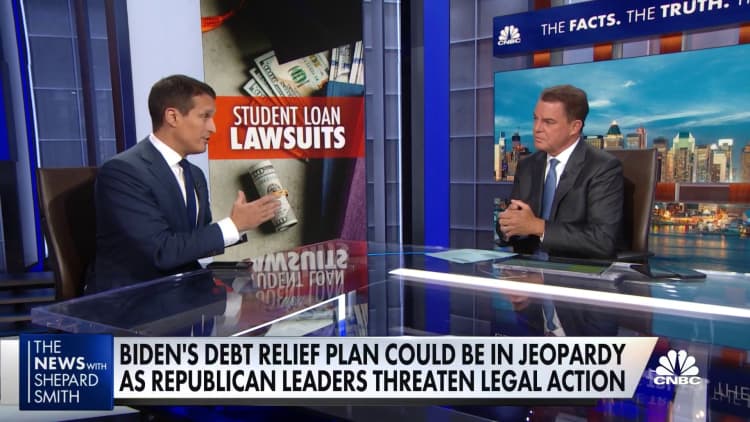
GOP could bring a lawful problem to scholar mortgage forgiveness
How marketplace overall health enrollees can claim a share of $603 million in rebates

A provision from the American Rescue Strategy of 2021 tends to make student bank loan forgiveness federally tax-totally free by means of 2025, and point out revenue taxes rely on no matter if and when you can find state conformity with federal tax laws.

Very last 7 days, Mississippi’s Department of Revenue verified with CNBC that student bank loan forgiveness will be taxable, and the North Carolina Department of Earnings shared the similar in a information launch.

Of study course, with condition laws in flux, it is really continue to attainable these tax procedures, between others, may well change.

Taxation is feasible in other states

In addition to Indiana, Mississippi and North Carolina, point out-degree taxation also may perhaps be feasible in Arkansas, California, Minnesota and Wisconsin, according to a preliminary investigation from the Tax Foundation.  

The group in the beginning approximated that 13 states may well tax college student loan forgiveness and has revised projections with updates.

Republicans weigh plans to fight Biden's student loan forgiveness

It now initiatives seven states — Arkansas, California, Indiana, Minnesota, Mississippi, North Carolina and Wisconsin — may perhaps tax college student personal loan forgiveness.

Taxing forgiveness is not probably in Massachusetts, but the state hasn’t shared an formal dedication.

Now, here is a breakdown of the position in pending states.

Arkansas: Most likely taxable 

While the Arkansas Division of Finance and Administration hasn’t issued a formal final decision, a determination might get there in the coming days, a spokesperson explained to CNBC.

Nonetheless, the point out will not conform to the federal code “in any major way,” according to the Tax Foundation, producing forgiven student credit card debt probable to be taxable without having point out action.

California: Potentially taxable

California may well also tax college student personal loan forgiveness, depending on how the Office of Education administers the plan, a spokesperson from the state’s Franchise Tax Board explained to CNBC.

Massachusetts: Very likely not taxable  

When the Massachusetts Division of Revenue has not created a ultimate perseverance, condition Rep. Steve Owens, a Democrat, said in a tweet that scholar loan forgiveness will never be taxable.

What is actually more, the state has already issued direction on conforming to the American Rescue Plan’s exclusion, Owens explained in a different tweet.  

Mississippi: Taxable 

The Mississippi Section of Earnings has confirmed with CNBC that college student bank loan forgiveness will be taxable at the point out stage.

North Carolina: Taxable 

University student bank loan forgiveness is “now regarded taxable revenue,” according to a news launch from the North Carolina Division of Profits. Having said that, the office is monitoring laws modifications from the state’s Common Assembly.

Wisconsin: Perhaps taxable

With the condition tax law conforming in advance of the American Rescue Strategy Act, it is really possible Wisconsin may perhaps tax student loan forgiveness, according to the Tax Foundation.

Tax-absolutely free forgiveness will call for a statutory transform and motion from the condition legislature, a spokesperson for the Wisconsin Section of Revenue advised CNBC.

“We will unquestionably tackle this discrepancy with federal legislation in our upcoming biennial spending budget request in an work to make certain Wisconsin taxpayers you should not encounter penalties and improved taxes for getting their financial loans forgiven,” they said. 

Governor Newsom Signs Budget Putting Money Back in Californians’ Pockets and Investing in State’s Future

Governor Newsom Signs Budget Putting Money Back in Californians’ Pockets and Investing in State’s Future

SACRAMENTO – Governor Gavin Newsom today signed a $308 billion state budget that provides direct tax refunds for 23 million Californians to help address rising costs, tackles the state’s most pressing needs, builds our reserves, and invests in California’s future.

Here are the top 10 things you need to know about the budget:

1. “Cha-ching! You just received a deposit.”

Global inflation. Rising costs. It’s hard out there and we know it. So, we’re giving you $9.5 billion back. MILLIONS of Californians– 23 million to be exact – will benefit from up to $1,050, as soon as October! See if you qualify on the new Middle-Class Tax Refund calculator here.

2.  Don’t go into crippling debt over a hospital visit

Want health care? We’re now the FIRST and ONLY state in the nation that offers universal access to health care coverage, regardless of your immigration status. Want insulin? California will be producing our own insulin to make it cheaper and more affordable for everyone.

3. A real “Pro-life” agenda

Fun fact – California is actually a pro-life state. We’re protecting reproductive freedoms and supporting Californians throughout their lives. In this budget, we’re investing over $200 million in reproductive care. We’re making a company’s willingness to move OUT of anti-choice states and TO the reproductive freedom state of California a factor in awarding state business tax credits. But we’re not stopping at reproductive care. We’re investing in a child’s entire lifespan. From birth to college and beyond. That means universal preschool, free school meals, expanded before and after school programs, more counselors for our schools, free community college, the list goes on.

4. Climate change is real y’all

While SCOTUS is kneecapping the federal EPA’s ability to fight climate change, California is making a climate commitment on the scale of what other countries are spending. Our $53.9 billion in new investments will better protect Californians from the extreme weather that has been impacting our bills, our livelihoods, our farms and our families. We’re investing in fire protection and drought response while forging an oil-free future away from big polluters, and more. Later is too late and we will act now so our kids and grandkids have a brighter, cleaner future.

5. Getting people into housing & shelter and off the streets

We are making major investments to address California’s homelessness crisis by getting people into housing & shelter. We have $2.2 billion for encampment resolutions around the state and new bridge housing to support people going through CARE Court – tens of thousands of people with a safe roof over their head and the mental health and substance use help many desperately need.

6. Keeping the lights on

California has an energy plan. Drought is causing lower energy production. Extreme heat is causing increased energy demand. Wildfires threaten energy infrastructure. So, we’re investing $4.3 BILLION to help keep the lights on this summer, invest in clean and reliable energy infrastructure, help with your energy bills, accelerate our transition to clean energy and so much more. We’re building the energy system of the future.

7. A real public safety plan

Californians should always feel safe — whether that’s at home, at the park, or at work. California is tackling the root causes of crime and getting guns and drugs off our streets. The state is launching the largest gun buyback program in the nation, funding a permanent Smash and Grab Enforcement Unit to fight retail theft, and investing $30 million to support the National Guard’s drug interdiction efforts, targeting transnational criminal organizations.

8. Literally transforming education in our state

It’s no longer K-12, it’s Pre-K -16. We are investing a – truly – historic $170 billion to continue our transformation of education in California. From our master plan for early learning to free community college, education has never been more accessible in our state. NEW this year, we have $7.9 billion to help with learning recovery, more investments in higher education, an additional $2 billion for affordable student housing (on top of last year’s $2 billion), and $3.5 billion that schools can use on arts, music, and more.

9. Getting our kids help with mental health

After these last few years, everyone knows we are experiencing a mental health crisis and California is taking it seriously. We’re investing big in behavioral health for adults and our kids. This year, there’s new urgent funding for wellness support programs, funding for youth suicide reporting and prevention, and more.

10. Rebuilding California

Railroads. Highways. Streets. We’re investing in infrastructure! This budget includes a $14.8 BILLION transportation infrastructure investment. That means money for rail and transit projects, climate adaptation projects, walking and bicycling projects, high-speed rail, our ports, and more. AND we’re investing to speed up our transition to zero-emission vehicles. Beep beep!

“In the face of new challenges and uncertainties, we’re providing over $17 billion in relief to help families make ends meet, and doubling down on our investments to keep building the California Dream on a strong fiscal foundation,” said Governor Newsom. “This budget invests in our core values at a pivotal moment, safeguarding women’s right to choose, expanding health care access to all and supporting the most vulnerable among us while shoring up our future with funds to combat the climate crisis, bolster our energy grid, transform our schools and protect communities. Building a better future for all, we’ll continue to model what progressive and responsible governance can look like, the California way.”

Amid record rates of inflation and economic uncertainty on the horizon, the budget continues to build resiliency with $37.2 billion in budgetary reserves and 93 percent of the discretionary surplus allocated for one-time projects.

Additional details include:

$17 Billion Inflation Relief Package

$9.5 Billion for Tax Refunds to Help Address Inflation: The budget provides tax refunds of up to $1,050 for 23 million Californians to help offset rising prices. 

$1.95 Billion for Emergency Rental Assistance: The budget provides additional funds to ensure qualified low-income tenants who requested rental assistance before March 31 get the support they need.

$1.4 Billion to Help Californians Pay Past-Due Utility Bills: Expanding on last year’s utility relief program, the budget provides funds to continue covering past-due electricity and water bills.

$439 Million to Pause the State Sales Tax on Diesel for 12 Months: Bringing relief to the commercial sector and drivers, the budget includes a pause of the General Fund (3.9375 percent rate) portion of the sales tax rate on diesel fuel that will provide an estimated $439 million in relief.

$53.9 Billion California Climate Commitment 

New investments in this year’s budget bring California’s multi-year climate commitment to $53.9 billion to protect Californians from the impacts of climate change, help forge an oil-free future and tackle pollution. 

Drought and Water Resilience: Building on last year’s $5.2 billion commitment to ensure water security for Californians, the budget invests another $2.8 billion for near- and long-term actions to build water resilience, promote conservation and more.

Fighting Wildfires: $2.7 billion investment to reduce the risk of catastrophic wildfires and bolster forest health. These projects include forest thinning, prescribed burns, grazing, reforestation, and fuel breaks.

Accelerating the Zero-Emission Vehicle (ZEV) Transition: Building on last year’s unprecedented ZEV package, the budget invests an additional $6.1 billion to create a total $10 billion package to expand ZEV access and affordability and support the build-out of infrastructure across the state.

Bolstering our Energy System: Allocates $4.3 billion to support energy reliability, provides relief to ratepayers, creates strategic energy reserves and accelerates clean energy projects.  Allocates an additional $3.8 billion for clean energy projects to boost affordability and reliability.

$14.8 billion for regional transit, rail and ports projects to support the continued development of clean transportation projects, including California’s first-in-the-nation high-speed rail system and bicycle and pedestrian projects.

Expanding Health Care Access

Health Care Access for All: With this budget, California becomes the first state in the nation to provide universal access to affordable health coverage for lower-income individuals by providing coverage for Californians ages 26 to 49, regardless of immigration status. It also establishes the Office of Health Care Affordability to develop cost targets for the health care industry and impose consequences if they are not met.

Reproductive Health Care: As other states restrict access to this critical care, California is providing more than $200 million for grants and services for reproductive health care providers in order to expand access, improve clinical infrastructure and more to prepare for the expected influx of women from out of state seeking care.

Transforming the Children’s Behavioral Health System: Building on the $1.4 billion investment in last year’s budget to transform California’s behavioral health system for all children, the budget includes an additional $290 million over three years to address urgent needs, including funding for programs that promote well-being and grants to support children and youth at increased risk of suicide and a youth suicide crisis response pilot.

Affordable Insulin: The budget invests $100 million to develop and manufacture low-cost biosimilar insulin products to increase insulin availability and affordability in California.

Confronting Homelessness and the Mental Health Crisis

Additional $3.4 Billion General Fund over two years to build on last year’s $12 billion multi-year investment by continuing progress on expanding behavioral health housing, encampment cleanup grants and support for local government efforts.

Supporting the CARE Court framework to assist people living with untreated mental health and substance abuse disorders, the budget includes funds for state department and Judicial Branch costs associated with the proposal.

Safer Communities

Combatting COVID-19: The budget adds $1.8 billion to continue implementing the state’s SMARTER plan, including more funding to support school testing, increase vaccination rates and more. The budget also invests $300 million General Fund for CDPH and local health jurisdictions to permanently expand the state’s capacity to protect public health and promote health equity.

Tackling Crime: The budget expands CHP’s retail theft task force and includes funding for the Attorney General to prosecute organized retail theft crimes, lead anti-crime task forces throughout the state, and establish a new Fentanyl Enforcement Program. Additionally, the budget expands fentanyl drug interdiction efforts led by the California Military Department.

The inflation relief package builds on Governor Newsom’s nation-leading stimulus package last year to accelerate California’s economic recovery with Golden State Stimulus checks for two out of every three Californians, as well as the largest statewide renter and utility assistance program and small businesses relief program in the country.

The budget and related budget-implementing legislation signed by the Governor today include:

  • AB 178 by Assemblymember Philip Ting (D-San Francisco) – Budget Act of 2022.
  • AB 180 by Assemblymember Philip Ting (D-San Francisco) – Budget Act of 2021.
  • AB 181 by the Committee on Budget – Education finance: education omnibus budget trailer bill.
  • AB 182 by the Committee on Budget – COVID-19 emergency response: Learning Recovery Emergency Fund: appropriation.
  • AB 183 by the Committee on Budget – Higher education trailer bill.
  • AB 186 by the Committee on Budget – Public health.
  • AB 192 by the Committee on Budget – Better for Families Tax Refund.
  • AB 194 by the Committee on Budget – Taxation.
  • AB 195 by the Committee on Budget – Cannabis.
  • AB 199 by the Committee on Budget – Courts.
  • AB 200 by the Committee on Budget – Public safety omnibus.
  • AB 202 by the Committee on Budget – County jail financing.
  • AB 203 by the Committee on Budget – Public resources.
  • AB 205 by the Committee on Budget – Energy. A signing message can be found here.
  • AB 210 by the Committee on Budget – Early childhood: childcare and education.
  • SB 125 by the Committee on Budget and Fiscal Review – Public resources: geothermal resources: lithium.
  • SB 130 by the Committee on Budget and Fiscal Review – State employment: State Bargaining Units 5, 6, 7, and 8: agreements.
  • SB 131 by the Committee on Budget and Fiscal Review – November 8, 2022, statewide general election: ballot measures.
  • SB 132 by the Committee on Budget and Fiscal Review – State employment: State Bargaining Units 16 and 18: agreements.
  • SB 184 by the Committee on Budget and Fiscal Review – Health.
  • SB 187 by the Committee on Budget and Fiscal Review – Human services.
  • SB 188 by the Committee on Budget and Fiscal Review – Developmental services omnibus.
  • SB 189 by the Committee on Budget and Fiscal Review – State Government.
  • SB 191 by the Committee on Budget and Fiscal Review – Employment.
  • SB 193 by the Committee on Budget and Fiscal Review – Economic development: grant programs and other financial assistance.
  • SB 196 by the Committee on Budget and Fiscal Review – State employment: State Bargaining Units: agreements.
  • SB 197 by the Committee on Budget and Fiscal Review – Housing.
  • SB 198 by the Committee on Budget and Fiscal Review – Transportation.
  • SB 201 by the Committee on Budget and Fiscal Review – Taxation: Earned Income Tax Credit: Young Child Tax Credit: Foster Youth Tax Credit.

The Governor also announced that he has signed the following bills:

  • AB 2724 by Assemblymember Dr. Joaquin Arambula (D-Fresno) – Medi-Cal: alternate health care service plan.
  • SB 1355 by Senator Anthony Portantino (D-La Cañada Flintridge) – Claims against the state: appropriation.


###

Two more states hit $5 a gallon gas prices

Two more states hit $5 a gallon gas prices

The countrywide normal jumped to $4.87 a gallon on Monday, according to AAA. Which is up 25 cents in the earlier week and 59 cents in the previous month.

There are now 10 states the place the ordinary price tag of gasoline is $5 a gallon or better, with the latest getting Michigan and Indiana. Washington, DC, is also above $5.

New Jersey, Pennsylvania and Massachusetts are just pennies absent. Ga is the only state with an average under $4.30 a gallon.

In full, more than one particular out of just about every five gasoline stations nationwide are now charging far more than $5 a gallon for typical, and just about half are charging $4.75 or a lot more.

Sad to say, price ranges could proceed to climb.

Veteran oil analyst Andy Lipow explained to CNN he expects the countrywide regular to strike $5.05 a gallon in the up coming 10 days.

Oil, the most important part of gasoline costs, carries on to get a lot more highly-priced — even after OPEC+ introduced options late final week to ramp up production.

Gas prices have been driven to report highs by a variety of elements, such as robust desire for energy as folks drive and fly much more.

The world may be careening toward a 1970s-style energy crisis -- or worse

Source, on the other hand, has failed to keep up. The United States is pumping a lot less oil than before Covid-19 began, and the market place is signaling OPEC+’s boost is too little, far too late. US crude jumped to a refreshing 3-thirty day period substantial of $120.99 a barrel Monday morning just before backing away.

Manuel Santana, a Bronx resident who works as an EMT, reported just a handful of months in the past it expense him $40 to fill up his tank to generate to operate. Now, it expenditures about $60.

“It really is annoying,” Santana mentioned even though at a Manhattan gasoline station wherever a normal gallon of gasoline now fetches $6. “Truthfully, there is not substantially you can do about it.”

Abdallah Alweimine, an Uber driver, stated his gasoline costs have long gone from $150 a 7 days to $250 a week. And he concerns they will go even larger.

Again in early March, the countrywide typical gas price 1st broke the report of $4.11 for a gallon of typical that experienced stood because 2008. That value now seems like the very good previous times. The nationwide regular value has been climbing steadily for the previous thirty day period, placing 27 data in the last 28 days.

Mark Zandi, main economist at Moody’s Analytics, advised CNN in a phone interview that he is experience extra optimistic about the means of the US overall economy to get inflation less than manage without resulting in a downturn. But Zandi said the one capture would be a even more spike in oil charges.

“If oil price ranges go to $150, we are going into recession. There is no way out,” Zandi stated.

— CNN Business’ Chris Isidore contributed to this report.